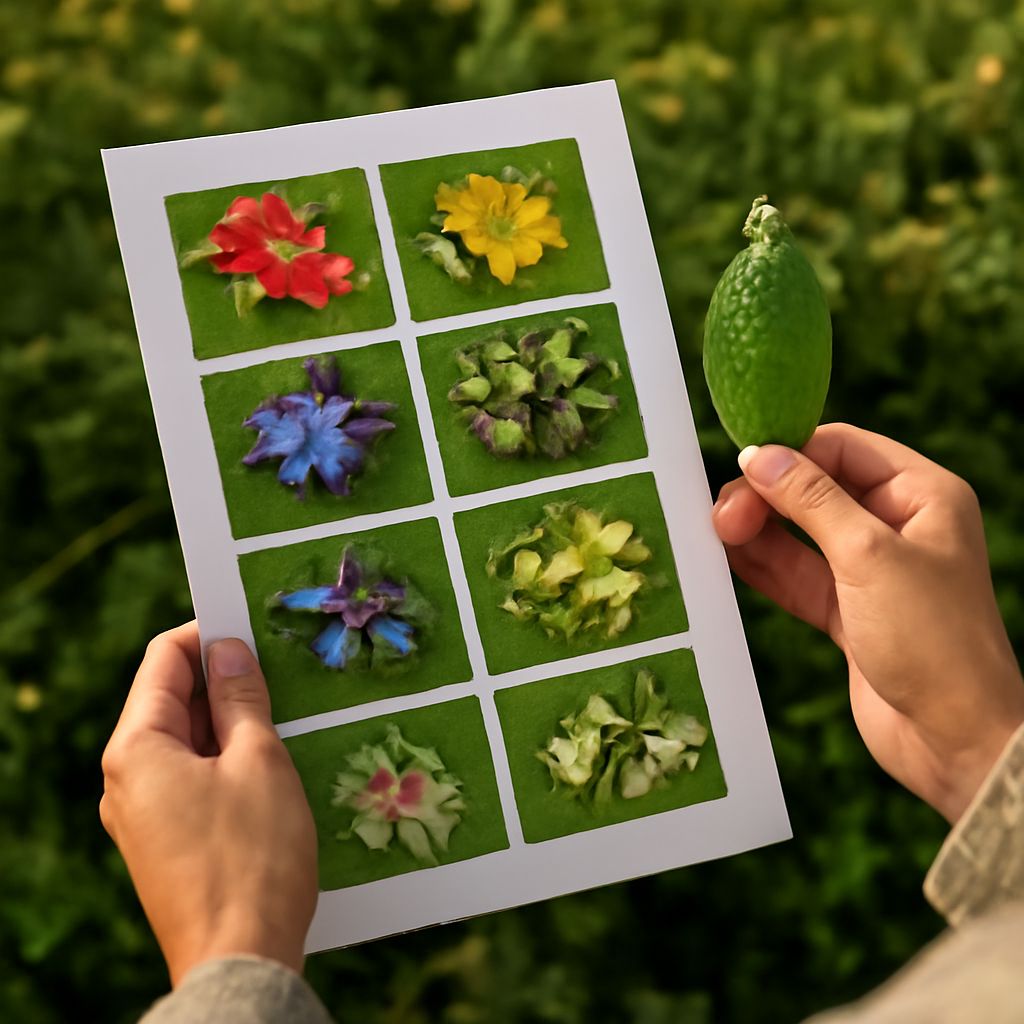
Look at the leaves where they meet the stem, then photograph the whole plant. If you are wondering which plant is growing in your garden, those details give you a sound place to start. Identifying a garden plant from its leaves takes a little more than matching a single picture: the edges, arrangement, and other parts all help narrow the possibilities.
Garden Plant Identification by Leaf: Notice the Pattern
Begin with a healthy, mature leaf when possible. New growth can look different from older foliage, and a damaged leaf may have lost its natural edge. Compare several leaves. For garden plant identification by leaf, the arrangement along a stem is often as helpful as the shape of the blade.
Find the point where each leaf joins the stem. Opposite leaves grow in pairs at a node; alternate leaves emerge at different points along the stem. Some plants have leaves in a whorl, with three or more at a node. Check several nodes because the pattern can vary along a shoot. A photo of the stem with the leaves attached preserves this useful clue.
Next, ask whether each leaf is simple or compound. A simple leaf has one blade, though it may be deeply lobed. A compound leaf has separate leaflets on a shared stalk. Look for a bud where the leaf stalk meets the stem; individual leaflets generally lack one.
Read the edge, veins, and surface
Turn the leaf gently and notice its outline. Is it long and narrow, oval, or roughly heart-shaped? Are the margins smooth, toothed, or lobed? Look at the veins: some run roughly parallel, while others branch out from a central vein or spread from near the base. Measure a typical leaf, and include a ruler or coin in a photograph for scale.
Color and texture add information, but light, age, and growing conditions can change their appearance. Record whether the surface looks glossy, dull, hairy, or leathery, and photograph both sides. Avoid crushing or tasting an unknown plant. If it may irritate skin, leave it untouched and take pictures instead.
A useful question is, “What kind of plant do I have?” Write down the combination of features you can actually see before looking for a name. A toothed edge alone fits many plants; combine it with leaf arrangement and stem features to identify a garden plant by its leaves.
Photograph the whole plant
Step back and look at its shape. Is it a low clump, a vine, or a woody shrub? Note its approximate height, whether the stem is woody or soft, and whether flowers, fruit, or buds are present. Record the season and your region too.
Take one clear picture of the entire plant, one of a leafy stem, and close-ups of the upper and lower leaf surfaces. Add separate pictures of flowers or fruit if they are present. Use even light and a plain background, and keep the feature in focus.
Compare descriptions, not just pictures
A photo-identification app can suggest names when you are asking, “What kind of plant do I have?” Treat each result as a candidate. Compare it with a reliable regional field guide, university extension description, or botanical garden collection. Read the written features as well as looking at photographs: does the leaf arrangement match? Are the plant’s size, stem, and flowers consistent with your observation?
For identifying garden plants by their leaves, a regional botanical key can lead you through paired choices, such as opposite or alternate leaves. If a term is unfamiliar, look it up before choosing. When an answer does not fit, retrace the steps instead of forcing the plant into the nearest picture. The Oregon State University guide to identifying woody plants is one example of a resource built around visible characteristics.
A shrub identification tool can be especially helpful when a woody plant has no flowers. Enter the leaf arrangement, leaf type, and other features the tool requests, then examine the descriptions it returns. A tool for identifying shrubs may cover only a particular region or group of plants; check its stated scope before relying on an absent result. An image-based shrub identifier can also give you possibilities to investigate, but it may miss the right one or return a convincing lookalike.
If you still cannot tell what plant you have, photograph it again when it flowers or fruits, or ask your local extension office for help. Send the views you collected along with the location, date, and growing conditions. A specialist may need a particular detail or a specimen, so ask before cutting or mailing anything.
Check the result before acting
When the question is “What kind of plant do I have?”, a name is most useful when several independent details agree. Leaf-based identification of a garden plant may stop at a genus or a short list until more features appear. Do not decide that a plant is edible from one leaf or an app result; consult a qualified local expert before considering it for food.
First note the leaf arrangement and edge. Photograph the stem and whole plant, compare several features with a reliable description, and check flowers or fruit when available. If the evidence conflicts, keep the name tentative and seek a second opinion. Keep your notes for the next comparison.