A small pot has arrived with fleshy leaves edged like an open mouth. Give your tiger-jawed succulent a bright place and a draining pot, then learn how its soil dries before watering. Its leaves hold water, but its roots cannot sit in damp mix for long.
Tiger Jaws Succulent Identification and Name
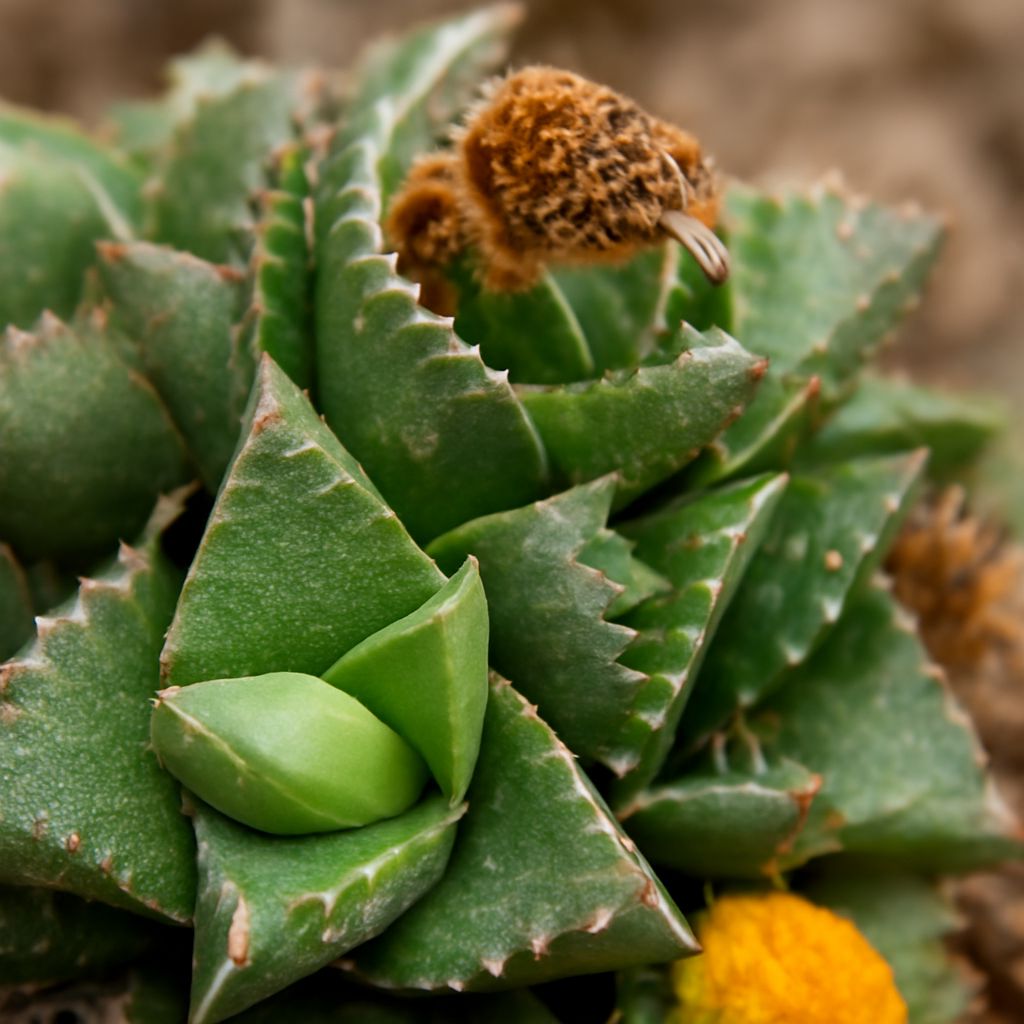
The plant commonly sold as a tiger jaw succulent is often Faucaria tigrina, a member of the Aizoaceae family. It forms a low clump of thick, triangular leaves arranged in opposing pairs. Their margins carry long, soft, threadlike teeth; white dots may speckle the surface. The teeth look formidable but are not sharp thorns. Kwantlen Polytechnic University describes its leaves and southern African origin.
A tiger jaws succulent may also carry another Faucaria name. Singapore’s National Parks Board uses the common name for Faucaria felina as well. Check the botanical label if you want a particular species: the common name alone does not settle the identification. This guide focuses on F. tigrina.
Mature tiger jaw succulents can bear large yellow, daisy-like flowers in fall or winter. The display is welcome but not assured on a windowsill; Kwantlen Polytechnic University notes that flowers are unlikely indoors. The tiger-jawed plant is attractive even without flowers.
Light, temperature, and a suitable pot
Set the tiger jaws plant in a bright window with some direct sun. If it has been growing in shade, introduce stronger sun gradually over a couple of weeks. Start with gentle morning light and watch the leaves; sudden exposure to hot afternoon sun through glass can damage a plant that has not adjusted. Pale, stretched growth reaching toward the window is a cue to increase light gradually.
In nature this species grows among rocks with some shelter from surrounding vegetation, even though cultivated plants are given strong light. Give the pot good air movement and bring it indoors ahead of frost. A bright, cool room suits this succulent tiger jaw in winter, provided the plant is protected from freezing and cold, wet soil.
For this toothed succulent, choose a pot with a drainage hole, just large enough for the roots and a little room for growth. A broad, shallow container suits a spreading clump, while excess wet mix in a much larger pot takes longer to dry. Empty the saucer after watering. Use a gritty, fast-draining cactus mix. Coarse mineral particles help keep the mix open around the roots.
Water with the season
During active growth, water the mix thoroughly and let the excess drain, then allow it to dry between waterings. Test below the surface with a wooden skewer or a finger rather than relying on a calendar. A hot, bright room and a small porous pot will dry sooner than a cool room and a glazed pot. A tiger jaw succulent in active growth can use more frequent water than the same plant in winter.
When growth slows in winter, the tiger jaws succulent may need much less. The Royal Horticultural Society advises keeping the medium only just moist outside active growth. Keep the plant cool but frost-free and make sure the mix is not staying wet. If indoor warmth keeps the plant growing, judge by growth and the drying mix rather than the month alone; still avoid leaving water in the saucer.
Firm, plump leaves are a useful baseline. If lower leaves wrinkle and the mix is dry throughout during active growth, water and watch for recovery. Soft, translucent leaves or a dark, mushy base in wet soil point to excess moisture. Stop watering, inspect the roots and drainage, and remove damaged material with a clean tool. Healthy roots and firm tissue should remain; a severely rotted crown may not recover.
Make another plant
Mature tiger jaws plants can supply stem cuttings, and seed is another route. For a cutting, choose a healthy side shoot with a piece of stem, separate it cleanly, and allow the cut surface to dry before setting it in a small pot of gritty mix. Keep it in bright light out of harsh sun while roots establish, and water cautiously. The Royal Horticultural Society lists both stem cuttings and seed as propagation methods. A loose leaf on its own is less dependable than a proper shoot.
For seeds, use a fine, well-draining starting mix and follow the packet’s depth and moisture instructions. Give seedlings gentle light as they establish, and handle the roots carefully when moving them. Choose nursery-propagated seed or plants to help protect wild populations.
A little fertilizer diluted for succulents can support active growth; follow the label and avoid feeding a stressed or dormant plant. Repot when the clump has outgrown its container or the mix no longer drains well, using fresh gritty material and a pot with a clear outlet. The best routine is a close look at the leaves and soil, not a fixed schedule.
If the paired leaves are firm and the mix is still damp below the surface, leave the watering can where it is; those stored reserves can carry the plant until the pot dries further.