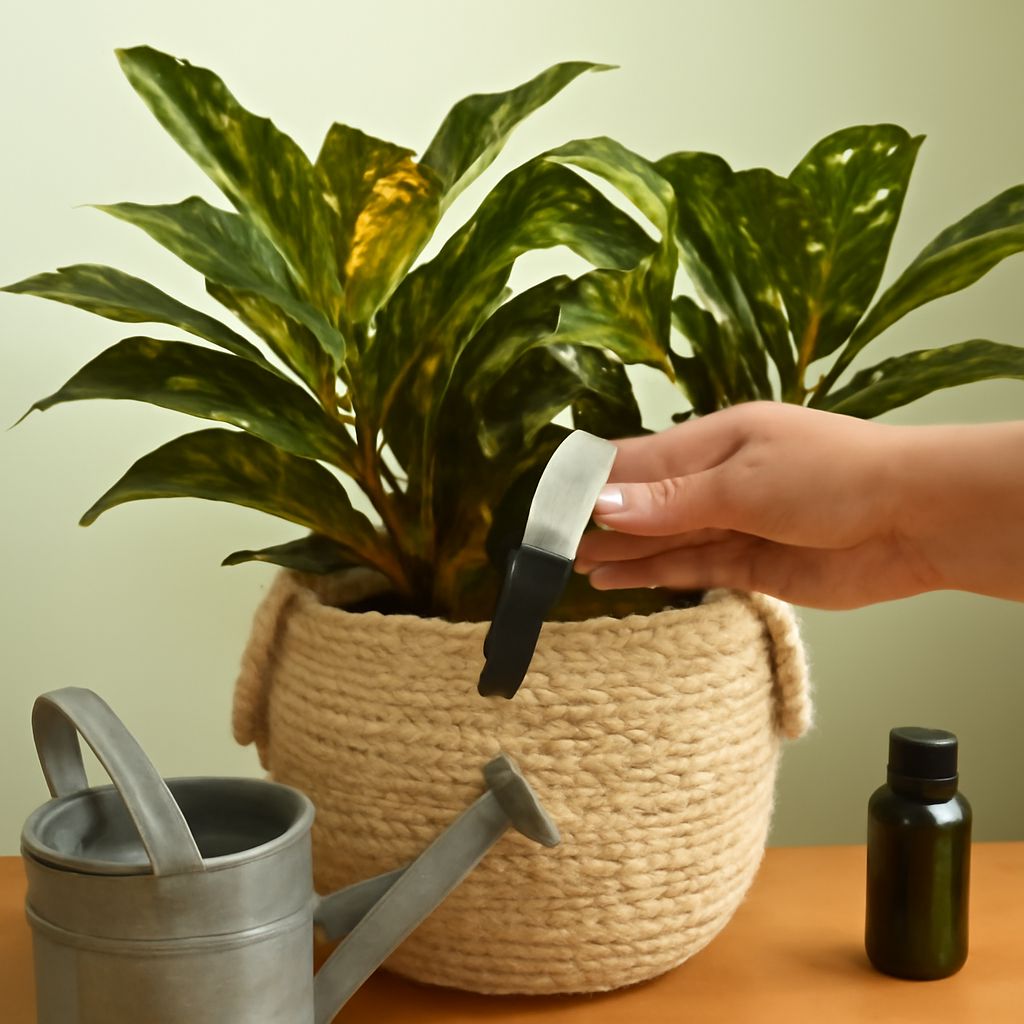
Push a moisture meter for plants into the root zone, read it, and check the soil before reaching for the watering can. A soil moisture meter for a plant can reveal damp mix beneath a dry crust, where a finger test alone may miss it.
Plant Soil Moisture Meter: Choose a Probe for the Job
A simple analog water meter for plants usually has a metal probe and a dry-to-wet dial. It is inexpensive and quick for occasional checks in pots or garden beds. Its scale is relative: a “4” is not a universal percentage of water or a command to irrigate. Choose a plant watering meter with a stem long enough to reach the roots you want to check, but slim enough for the pot.
A digital plant watering meter, or soil moisture meter for plants, may show a number or a percentage, depending on its sensor and display. Some electronic probes use capacitance to estimate water content; others use different sensing methods. Check the instructions for the measurement, suitable growing media, batteries, and whether the probe is designed to remain in place. A percentage is most useful when the device is calibrated for the soil or mix being measured.
For a bed you monitor throughout the season, a fixed plant moisture indicator can make repeated checks convenient. A tensiometer is another choice for garden soil: it measures how tightly soil holds water, rather than water content. It needs water, careful installation, and maintenance. UC Davis explains how tensiometers work and where to install them.
Read where the roots drink
In a small pot, insert the probe gently into the mix between the stem and the pot wall, aiming for the middle of the root ball. In a deeper container, check at more than one depth if the probe and pot allow it. Avoid forcing the tip through roots or into the bottom of the container. Follow the maker’s insertion-depth and waiting instructions; the sensing area may extend beyond the tip.
A plant watering meter and a plant’s soil moisture meter should sample the area that actually feeds the plant. For a garden vegetable, check several inches down in the active root zone and repeat at a second spot. In a large bed, check both a typical plant and a drier-looking area. Soil near a drip emitter can be much wetter than soil between emitters.
A water meter for plants gives a local reading. If the surface is dry but the lower mix is damp, wait and check again. If the upper layer is wet while soil deeper in the root zone is dry, water slowly and check again after it has soaked in. Utah State University suggests sampling at several locations before and after irrigation to see how deeply water has moved in the soil. Its guide to monitoring irrigation with probes describes this practical check.
Make the scale meaningful
Learn the dial of your plant watering meter in the actual potting mix or bed. First, water thoroughly and allow the pot to drain; record the reading and feel a small sample from the same depth. Over the following days, repeat at a similar location and depth as the mix dries. Note the reading when the soil reaches the dryness your plant prefers. This is a practical reference for that plant and mix, not a laboratory calibration or a percentage of water.
For example, a fern that prefers evenly moist mix may need water while the sample still feels slightly moist. A cactus that prefers a dry interval should be allowed to dry further, according to its care needs. Use the plant’s watering needs to interpret each moisture indicator for the plant, and remember that small pots often dry faster.
A moisture indicator for plants can be misleading when its probe has poor contact with the soil or hits a pocket of bark, air, or fertilizer. If a reading seems odd, take another nearby and compare with a small soil sample. Colorado State University notes that inexpensive meters can read wetter in highly fertile soil and drier where fertility is low; learn their behavior in the particular soil. See its vegetable watering guidance.
Keep readings useful
Clean and dry your plant watering meter after use according to its instructions. With a portable plant soil moisture meter, inspect the stem for corrosion or damage and replace the battery if needed. Do not leave a portable probe in wet soil unless its maker says it is designed for that purpose. A plant’s soil moisture gauge used in a fresh mix deserves a new set of reference readings: texture and salts can change the response.
For a soil moisture meter used on plants that offers calibration, follow its manufacturer’s procedure for the specific medium. A comparison with a soil sample helps you interpret a plant’s moisture indicator, but it does not turn a relative dial into a precise instrument. For a calibrated electronic device, soil-specific calibration improves the usefulness of quantitative readings; University of Arizona Extension explains how soil properties affect calibration.
Check the condition of the plant as well as the soil. Wilting in wet mix calls for a look at drainage and roots before adding water. If the reading and soil sample show that the root zone has reached the plant’s preferred dryness, water thoroughly; if the soil is still suitably moist, wait and check again.


