The answer depends on which plant you mean. Some succulents are cacti, while many belong to other plant families. When comparing a succulent with a cactus, start with the name on the label and the structures on the plant, rather than the thickness of its leaves alone.
Succulent vs Cactus: A Family and a Growth Form
A cactus is a member of the plant family Cactaceae. “Succulent” describes a plant with fleshy tissue adapted to store water; it is a growth form found across several families. Most cacti are succulent, often storing water in their stems, but many other succulents are outside the cactus family. The University of Hawaii’s botanical description calls Cactaceae mostly succulent, reflecting the variety within the family.
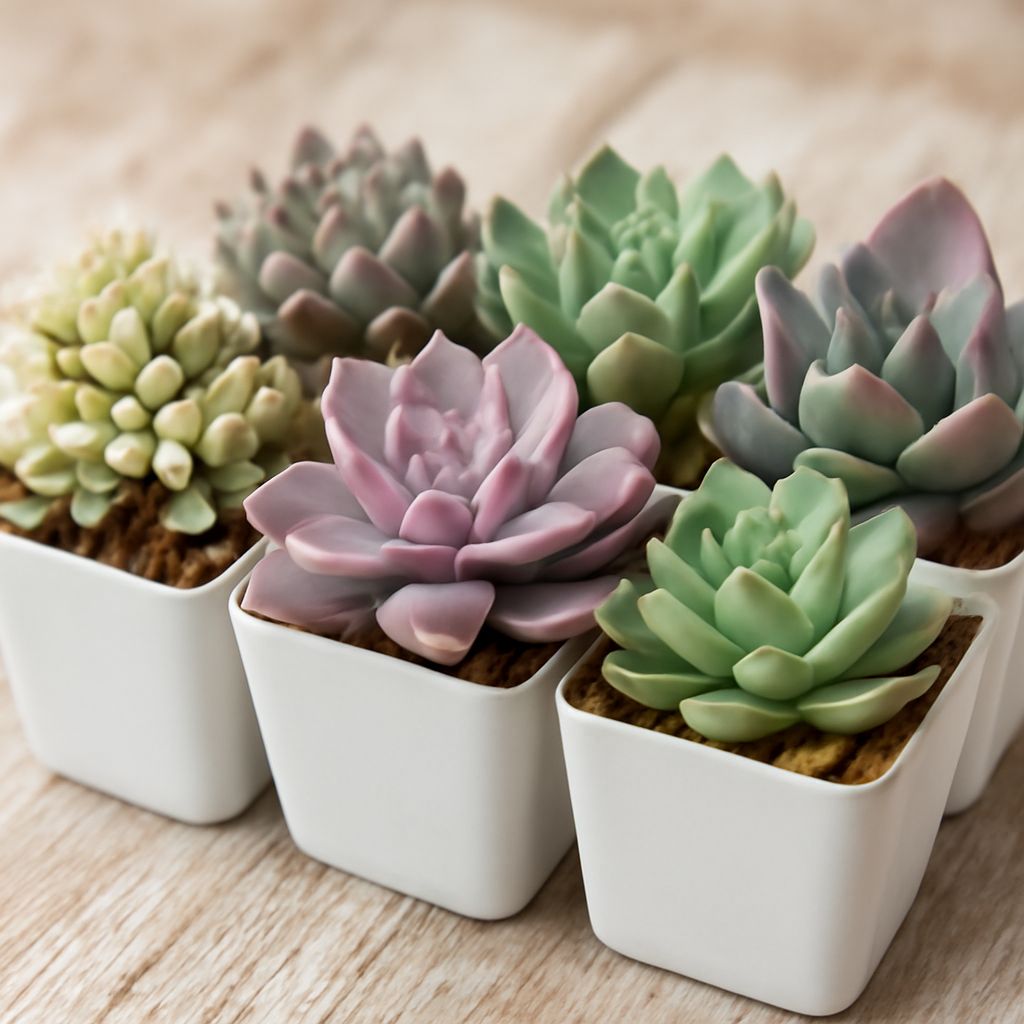
Are succulents cacti? Some are: a prickly pear is a cactus with water-storing pads. An echeveria, with its tight rosette of fleshy leaves, is a succulent from a different family. Both hold water, but that shared trait does not make them close relatives. To decide which succulents are cacti, look for the family features described below. The University of California’s succulent guide illustrates the variety of forms that can appear under the same nursery label.
For succulent vs cactus identification, think of one word as describing how a plant grows and the other as naming its family. The succulent vs cactus distinction allows the labels to overlap on a single plant. A cactus may be both a succulent and a cactus family member; an echeveria is a succulent without being a cactus.
Look for the small cushions called areoles
The most helpful visible family clue is the areole, a specialized growth point found on cacti. It can look like a small dot, cushion, or patch of fuzz on the stem. Spines, flowers, or new shoots grow from it. Purdue Arboretum describes areoles as structures unique to cacti.
Look closely at a prickly pear pad from a safe distance: its dots are arranged over the flat green stem, and spines or fine bristles may emerge from them. On a ribbed cactus, the areoles may follow the ribs. Use a magnifying glass or a close photo rather than touching the plant; some small bristles are difficult to see.
Are succulents cacti when they have sharp points? Spines alone cannot answer that question. Some succulent euphorbias also have ribbed stems and sharp projections, yet they lack cactus areoles. North Carolina Extension describes paired spines and notes that euphorbias belong to a different family. Do not cut a plant to check its sap: euphorbia sap can irritate skin and eyes, and the plant’s intact features are a better place to begin.
Compare more than one feature
In the comparison of succulents versus cacti, shapes offer clues rather than final verdicts. Many cacti have rounded, columnar, or flattened stems, while echeverias carry water in thick leaves arranged like a rose. Yet some euphorbias look like columns, and some cacti trail or have leafy growth. A single silhouette can lead you astray.
Succulents and cacti can also look quite different in bloom. When you compare a cactus with a succulent, flower shape and position give another set of details to check against a reliable plant profile. Photograph the whole plant, the stem surface, and any flowers separately. Include a close view of the point where a spine or branch meets the stem. Together these views give an identifier more to work with than a picture of a single sharp tip.
Some gardeners ask whether all succulent plants are cacti because the two groups share space on store shelves. The practical answer is no: aloe, jade plants, and echeveria are familiar succulents outside Cactaceae. If you ask, “Are all succulents cacti?” the family name gives you the clearest answer. A label marked only “assorted succulent” gives a starting category, not a species name. Keep the tag, but seek a more specific identification before relying on it for a plant’s particular needs.
The leafy cactus exception
The cactus-versus-succulent distinction has another wrinkle. Some leafy members of the cactus family do not resemble the plump desert forms in a nursery tray. Arizona State University describes Pereskia as a leafy cactus with areoles and a nonsucculent growth form. Family membership is established by botanical traits, not by how swollen the stem looks.
This matters when a succulent or a cactus seems to break the usual pattern. Leaves do not automatically rule out a cactus, just as a fleshy stem does not establish one. Look for several features together and check them against an identified example.
Check an unfamiliar plant
For a succulent versus cactus identification, start with any genus or species name on the pot. Compare photographs and descriptions from a university extension service or botanical garden, paying attention to areoles, leaves, stems, and flowers. If the label is missing or the details do not match, take clear photos and ask a local extension office or botanical garden for help. Whether a succulent is a cactus can be settled more confidently when the whole plant and its diagnostic features are visible.