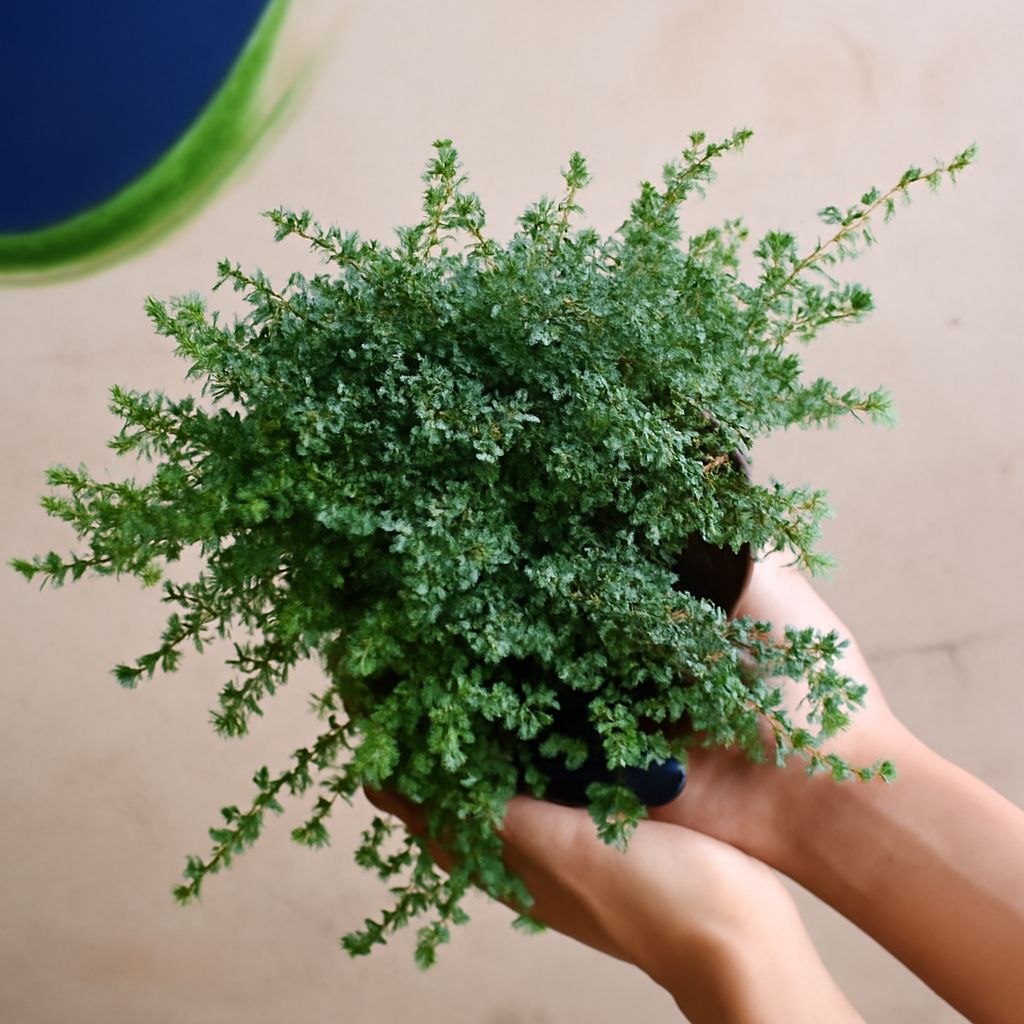
A small plant with blue-green sprays has caught your eye at the nursery, and you want to give it a place indoors. Before putting this peacock-colored moss lookalike on a sunny sill, learn what its fine foliage needs. This Selaginella, identified as S. uncinata, thrives with shelter from direct sun and steady moisture.
Selaginella uncinata: What You’re Growing
Despite the common name, peacock moss is a lycophyte, a vascular plant in an old lineage distinct from true mosses. It bears spores rather than flowers or seeds. Singapore’s National Parks Board describes its creeping stems and small, overlapping leaves; the species is native from central and southern China to Vietnam.
You may also see it sold as peacock spikemoss. The peacock-colored spikemoss has low, branching growth that can make a soft-looking mat, with tiny leaves arranged along the stems. The larger leaves sit at the sides, while smaller ones overlap along the stem. Use the botanical name on a label to distinguish this particular plant from other mosses and spikemosses sold for terrariums.
A garden design made with mosses can include many unrelated plants. A moss with a peacock-blue sheen, however, may be this spikemoss rather than a true moss. Identification matters because a plant’s label and growing needs are more useful than its color alone when you choose its companions.
Why the foliage looks blue
The leaves of Selaginella uncinata can appear green, metallic blue-green, or richly blue as the light and viewing angle change. The effect is iridescence: light reflects from microscopic structures in the leaf’s outer cells. It is a shifting sheen, so a plant can look greener from one position and bluer from another. A study of the leaf cells describes the structural basis of that color.
In S. uncinata, shade can make the blue more pronounced. The North Carolina Extension plant profile notes this effect and warns that direct sunlight can scorch the foliage. Enjoy the color as it changes rather than expecting every spray to stay electric blue all day.
Find a sheltered place for light
Set peacock moss in bright, indirect light, such as near an east-facing window but out of the direct rays, or behind a sheer curtain. A position farther from a brighter window can work if the plant still receives good ambient light. Avoid hot afternoon sun through glass, especially in a small enclosure that can heat quickly.
Watch the foliage after a move. Bleached or scorched patches call for less direct exposure; sparse, stretched growth suggests trying a somewhat brighter position. A peacock-blue moss plant in deep shade may show a lovely sheen, but it still needs enough light to maintain healthy growth.
Keep moisture steady without flooding
Feel the S. uncinata potting mix regularly. Water when its surface is just beginning to lose moisture, before the root zone dries out. Add water evenly until a little runs through the drainage holes, then empty the saucer. Frequency will change with pot size, room temperature, and season, so let the mix guide you instead of following a fixed calendar.
For Selaginella uncinata, aim for evenly moist soil, not a pot standing in water. A dry spell can leave the delicate tips crisp; persistently saturated mix can deprive roots of air. If the surface stays wet for a long time and growth weakens, check drainage and reduce watering while keeping the plant from drying completely.
The peacock-hued moss substitute also appreciates humid air. Chicago Botanic Garden recommends high humidity and humus-rich, moist soil. A bright bathroom with a suitable window, a humidifier, or a roomy terrarium can help where household air is dry. Keep the plant away from heating vents and cold drafts.
In a terrarium, give S. uncinata a modest amount of water and leave room for the stems to spread. If condensation continually covers the glass or the soil stays soggy, open the lid for ventilation and hold off watering. If the foliage dries quickly and the mix is losing moisture, adjust the opening or water carefully. Misting can briefly moisten leaves, but it does not replace water in the root zone.
Choose a pot and care for new growth
A shallow, wide container gives this peacock-colored moss lookalike room to spread. Choose one with drainage holes and use a moisture-retentive, humus-rich mix that still drains. A peat-free, loam-based mix with leaf mold is one option recommended by the Royal Horticultural Society. Set the crown at its previous level and firm the mix lightly rather than packing it hard.
As the blue peacock-colored moss spreads, trim dead or damaged tips with clean scissors. You can divide an established clump when it outgrows its container: lift it gently, separate a rooted portion, and set each piece into moist mix. Keep the divisions sheltered and evenly moist while they settle.
The spreading peacock-blue spikemoss is a practical choice for a contained display where you can tend it often. Keep neighboring plants with similar moisture and shade needs so that one watering routine suits the whole arrangement.
Read the plant over time
Look at the tips, the soil, and the newest growth together. For S. uncinata, crisp tips and rapidly drying mix are a cue to water sooner or improve humidity; soggy mix calls for better drainage and a lighter hand with the watering can. Adjust one condition at a time, then watch for fresh, firm growth and a stable green-to-blue sheen over the following weeks. The changing light and the plant’s response will tell you more than any single day’s color.