Choose this plant for its foliage and flowers if you have a warm, well-drained place for it. If your main goal is keeping animals away, treat the scaredy-cat coleus as an experiment: a plant sold under the canina name may have a pungent scent, but its effect on individual cats and dogs is uncertain.
Coleus Canina Plant Names and Identification
The name on a nursery tag needs a little interpretation. Coleus canina is a name used in the trade for a scented plant also called scaredy-cat plant. You may see Plectranthus caninus on a label, too. Kew’s Plants of the World Online lists that botanical name as a synonym of Coleus caninus. Meanwhile, the Royal Horticultural Society identifies a plant sold as scaredy cat or under the canina trade name as Plectranthus ornatus. These references show why a sales name alone cannot settle the identity of every plant in a pot.
Ask the nursery for its supplier’s full botanical name and growing information. Compare leaves, stems, and flowers with a reliable botanical description; photographs can narrow the choice but cannot prove identity by themselves. Keep the label after purchase, since the name and care details are useful when you ask a local extension office or nursery for help later.
What the foliage and flowers look like
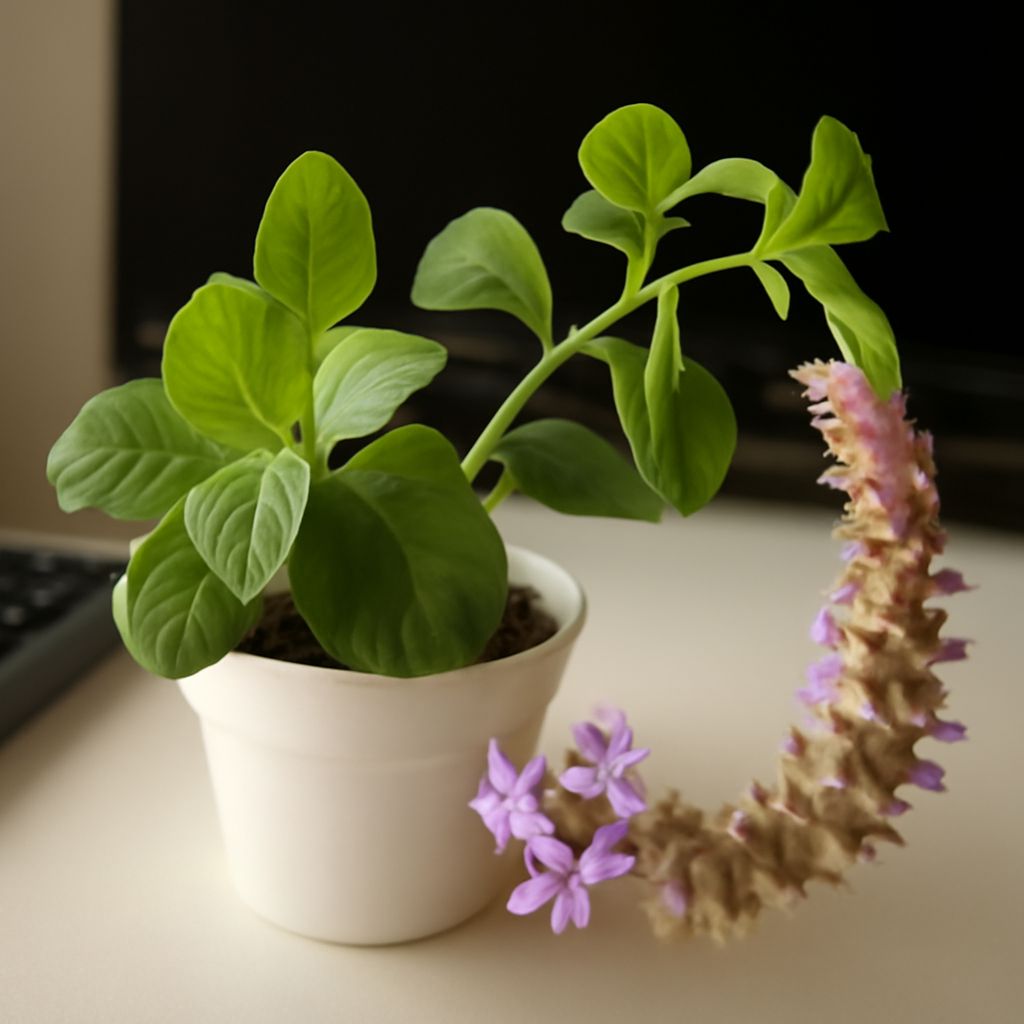
The plant known botanically as Coleus caninus belongs to the mint family. Its fleshy leaves are rounded to broadly oval, with gently toothed edges and a soft covering of fine hairs. The branching stems are also somewhat fleshy. Cambridge University Botanic Garden describes upright flower spikes with mauve-tinted bracts and pale flowers. Growth is low and branching, making it suited to the front of a bed or a container where the foliage can be seen.
The scent becomes more noticeable when the leaves are bruised or brushed. Before you bring a coleus of this type home, gently rub a leaf if the seller permits it. The odor is part of the plant’s character, and a spot close to a frequently used door may feel different from a sunny corner farther down the path.
Give the roots light soil and room to dry
A Coleus canina plant is tender, so choose a sheltered position after danger of frost has passed. A container is practical where winters are cold: it can spend the warm season outside and be moved to a bright, frost-free place before temperatures drop. Cambridge describes the species as needing winter protection. In a warm climate, watch the forecast and protect plants whenever frost threatens.
Choose a pot with drainage holes and use a free-draining potting mix. In a garden bed, select a spot where rain does not stand around the roots. A raised bed or a container can help where the ground stays wet. Give the plant bright light and some protection from intense afternoon heat, especially while it becomes established. Adjust to the actual conditions in your yard: a pot against a hot wall can dry much faster than one in a sheltered spot.
Water a newly placed plant thoroughly, then check the potting mix with a finger. Let the surface begin to dry before watering again, and allow excess water to drain away. Do not leave the pot standing in a saucer of water. During cool, dim winter conditions, growth slows and the container usually dries more slowly, so check before reaching for the watering can.
Pinch back soft tips if the plant becomes lanky, using clean snips. Remove damaged leaves and spent stems as needed, and give branches space for air to move. If a caninus coleus plant outgrows its pot, move it to a slightly larger container with fresh mix rather than burying its stems deeply. The size and rate of growth will depend on the plant sold, the container, and the length of your growing season.
Can it keep cats and dogs away?
Sellers often present the canina coleus plant as a natural repellent. The smell is real, but a reliable boundary is another matter. Oregon State University Extension notes that the claim has not been scientifically demonstrated; the RHS also reports that some cats appear to ignore the odor. There is no dependable distance or number of plants that will protect a bed.
For a bed that needs protection, use a physical barrier suited to the site. The Missouri Botanical Garden suggests fencing a portion of the yard where local rules permit it. A covered or fenced area is easier to assess than a promise on a plant label.
A repellent label also does not establish that a plant is safe to chew. Identification matters when pets can reach foliage: the ASPCA lists a different coleus species as toxic to cats and dogs, which does not establish the toxicity of every plant sold under this name. Keep an unidentified plant out of reach, and contact your veterinarian if an animal eats it.
Find its place in your garden
Try the caninus plant in a movable pot for its first season. Watch how quickly the mix dries, how much afternoon sun reaches the leaves, and whether passing feet brush the foliage. If the plant stays sturdy and the scent is welcome at that distance, you have found a place where its needs and your own fit together.