A shaded, damp patch may be a place for true moss. A sunny, well-drained bed calls for a different plant: moss-like verbena, known as V. tenuisecta, spreads low across the ground and produces clusters of small flowers. Its finely divided leaves suggest moss, but its needs are those of a flowering perennial.
Choose the site with its eventual spread in mind. A plant that looks small in a nursery pot can cover a generous patch of soil, spill over an edge, and send stems into nearby open ground as the season progresses.
Verbena tenuisecta: names and appearance
Verbena tenuisecta is a name you may find on a label or in an older garden guide. Clemson Extension also lists the plant as Glandularia aristigera. If you are shopping, use both botanical names and compare the foliage and growth habit; several other low-growing verbenas look similar and may have different labels.
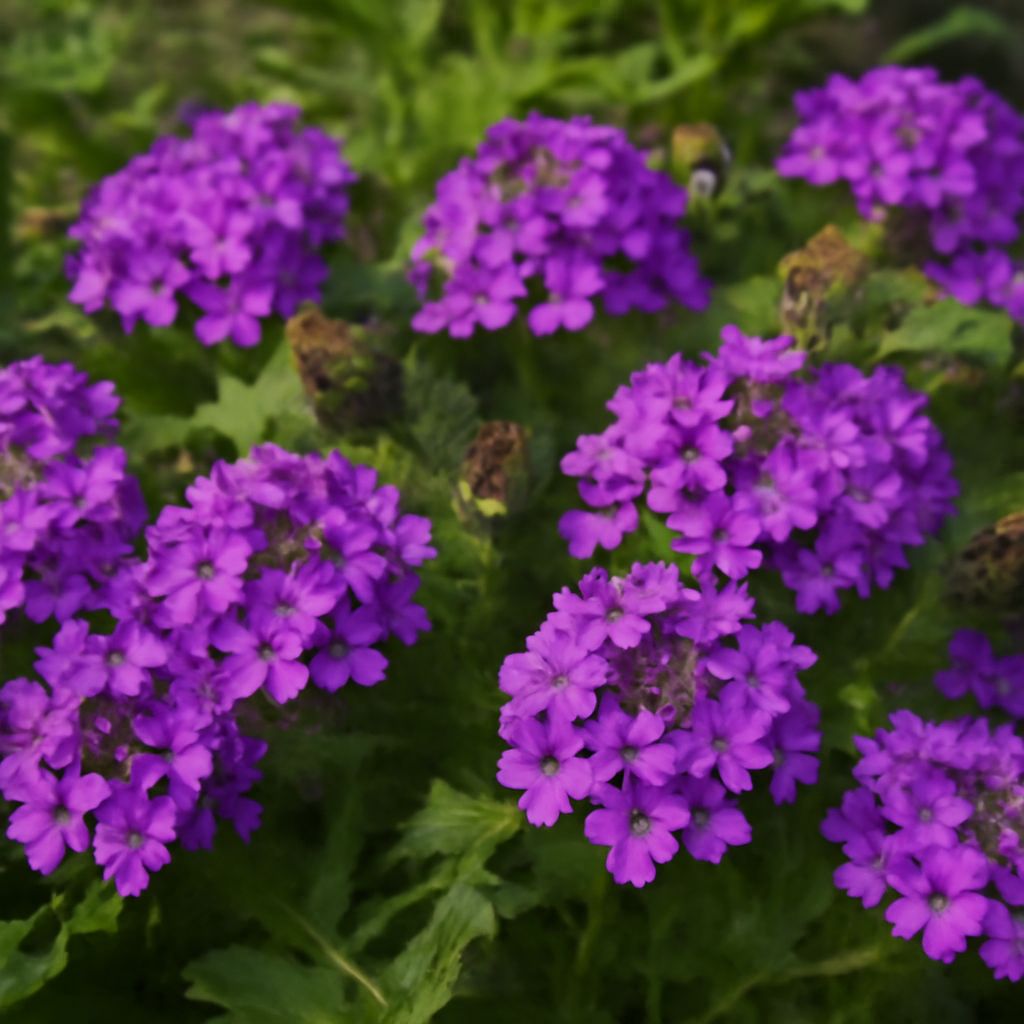
Moss verbena has trailing stems and small, deeply cut leaves that give its foliage a fine texture. Rounded clusters of little flowers rise above the greenery, often in shades of purple, pink, or white. It generally stays a foot tall or less and can spread 2 to 5 feet wide, according to Clemson Extension. The exact size depends on conditions and the plant selected.
True moss has no flowers and reproduces by spores. This moss-like verbena flowers and makes seeds; its roots grow into soil. Place the two according to their needs rather than their resemblance. A dry, exposed edge that suits the flowering plant may be a poor place for a moisture-loving moss.
Pick a sunny, open site
Give moss verbena ground cover a place in full sun, with at least six hours of direct light. Sun supports flowering and helps the foliage dry after rain. A border edge, open slope, or sunny rock garden can work for a moss-like verbena ground cover if you leave enough room for the stems to spread and keep them away from plants that are easily crowded.
Well-drained soil matters. The mossy-leaved verbena tolerates lean or sandy ground once established, but roots can suffer in soil that stays wet. After a heavy rain, notice whether water drains away or stands in the proposed bed. If the spot remains soggy, choose higher ground or make a raised bed with a broad area of free-draining soil. A handful of sand in a planting hole will not solve poor drainage in the surrounding clay.
Allow air between plants, especially in humid areas. Avoid placing the mat beneath dense shrubs where it will remain shaded and wet. It can soften the edge of a path, but a route used for regular foot traffic needs stepping stones or another durable surface.
Plant and establish the roots
Set out nursery plants when the ground is workable and severe cold is past. Before digging, arrange the pots at their eventual positions and consult the label for spacing. A plant that may spread several feet needs open ground around it; resist packing pots tightly for instant coverage. You can fill the temporary gaps with a light mulch while the plants grow together.
For each V. tenuisecta plant, dig a hole as deep as the root ball and somewhat wider. Ease the plant out of the pot, gently loosen any roots circling the outside, and set it at the same depth it occupied in the container. Return the soil, firm it lightly, and water thoroughly. Keep mulch clear of the crown, where the stems emerge from the soil.
During the first growing season, check the root area regularly. When the top inch of soil feels dry, water deeply enough to moisten the root ball, then let the surface begin to dry again. Sandy soil and hot, windy weather may call for more frequent checks; rain and heavier soil may lengthen the interval. The goal is to help roots reach into the surrounding ground without leaving them waterlogged.
Once rooted, V. tenuisecta is more tolerant of dry spells. Water during extended drought if foliage wilts and does not recover as temperatures cool. Aim water at the soil when practical and let it soak in rather than wetting the leaves repeatedly.
Keep the spread where you want it
Moss verbena can naturalize beyond a garden. Clemson Extension reports that the South American plant has naturalized across the southern United States, and North Carolina Extension describes it in fields and roadsides from Georgia to Florida. Naturalization alone does not establish a legal ban, but it is a reason to check local extension guidance and any applicable rules before planting, particularly near natural areas. If local guidance advises against it, choose a suitable noninvasive ground cover instead.
Give the moss-like verbena planting a defined edge and inspect it through the growing season. Pull unwanted seedlings of V. tenuisecta while small and trim stems that cross into paths or neighboring beds. Dispose of clippings according to local guidance rather than leaving them where they may spread. Remove weeds early, before the fine foliage grows around them and makes them harder to reach.
As warm weather continues, the moss-like verbena can carry repeated clusters of flowers over its spreading foliage. Bloom may slow in difficult heat or dry conditions and resume when conditions improve. Watch the edges as well as the flowers: trim wandering stems, remove unwanted seedlings, and leave enough open, sunny space for the moss-like verbena ground cover to grow without smothering its neighbors.