A bare arbor in a warm garden offers a place for a flowering climber, but the plant needs the right support and enough protection from cold. A bower-flowering vine such as P. jasminoides can cover that framework with glossy foliage and trumpet-shaped flowers when its stems have something slender to twine around.
Before planting, look at the winter temperatures, the hours of sun, and the space the mature vine can occupy. A little preparation makes it easier to guide new growth across the structure and reach the stems for pruning later.
Pandorea jasminoides: what to expect
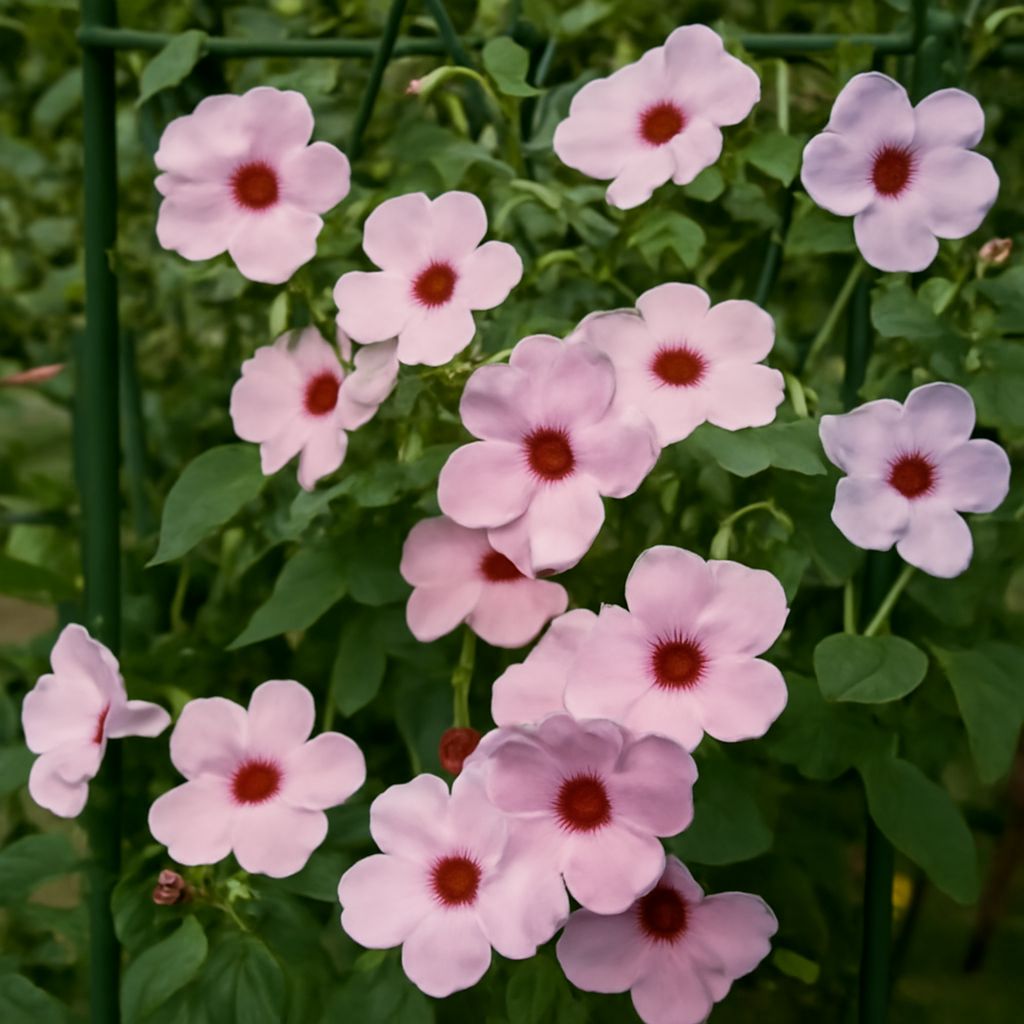
Pandorea jasminoides is an evergreen woody climber native to eastern Australia. Its leaves are divided into several glossy green leaflets, and its funnel-shaped flowers are commonly white or pale pink with a darker pink throat. Cultivars vary, so check the nursery label for flower color and mature size.
The bower plant climbs by winding its stems around a support. It can reach 15 to 25 feet under favorable conditions, so a small decorative stake will soon be inadequate. In a warm climate it can dress an arbor, fence, or trellis while keeping a relatively open appearance. It belongs to the trumpet-creeper family; despite the species name, it is not a true jasmine.
Flowering is most prominent in warm weather. A vine grown for its bower-like cover will need access to light as well as a framework: stems packed into a dark tangle are harder to manage and enjoy. Place it where you can see the flowers and still get to the structure behind them.
Match the site to your climate
This Pandorea vine is best suited to mild-winter gardens. University of Florida Extension lists USDA hardiness zones 9b through 11; frost can damage young growth, and exposed sites in colder parts of its range need particular care. A sheltered wall or courtyard can reduce exposure to cold wind, but it will not turn a cold-winter garden into a reliably frost-free one.
Where freezes are frequent, grow a Pandorea vine in a large container with drainage holes and a manageable support. Move it into a bright, frost-protected place before freezing weather. A potted P. jasminoides dries faster than one in garden soil in warm weather, so check its soil often, and reduce watering during cooler, slower growth without letting the root ball dry completely.
Choose full sun to partial shade outdoors. In hot regions, light afternoon shade can provide relief; too much shade may reduce flowering. The soil should hold some moisture while allowing excess water to drain. If rainwater stands for long periods, select a higher site or use a raised bed rather than planting into a wet hollow.
Set up the support and plant
Secure a trellis, arbor, or framework before planting. Choose narrow rails or sturdy wires that young stems can wrap around, and anchor the structure for the weight of a mature plant and the pull of wind. Leave a gap between a trellis and a wall so air can circulate and you can inspect and maintain both surfaces.
Set a bower vine close enough to reach its support without forcing the stems against it. Dig a hole as deep as the nursery root ball and wider than it. Ease the plant out of its pot, loosen any circling roots gently, and place the top of the root ball level with the surrounding soil. Fill the hole with the removed soil, firm it lightly, and water thoroughly.
Guide a few flexible shoots toward different parts of the framework. Tie them loosely with soft garden ties if needed, leaving room for the stems to thicken. Spread the shoots across the support rather than letting all of them wind up one post. Check the ties as the vine grows and loosen or remove any that begin to pinch.
Water, feed, and prune through the season
Keep the soil evenly moist while roots establish. Feel the soil near the root ball; when the surface begins to dry, water deeply and allow excess water to drain. In hot or windy weather, a newly planted bower climber may need attention more often. Once established, water during dry spells, especially when the soil has dried several inches down. Avoid keeping the roots waterlogged.
A light layer of mulch helps moderate soil moisture and suppress weeds. Keep it a few inches away from the woody base. A modest application of a balanced, slow-release fertilizer in spring can support growth in poor soil; follow the package rate. A healthy plant in fertile ground may need little extra feeding.
After a flush of flowers, trim long shoots to keep a flowering bower vine within its allotted space. Cut just above a leaf or side shoot, and remove dead or damaged stems. Avoid cutting the main stems back to the base as a routine measure. If frost damages the plant, wait until the risk of further freezes has passed and new growth shows which stems are alive before removing damaged wood.
As P. jasminoides matures, its stems become woodier and its reach expands. Each season, guide fresh shoots into open sections of the framework, check fastenings and supports, and trim growth that strays into gutters or neighboring plants. With that attention, the vine can keep climbing and flowering without closing off the paths and structures around it.