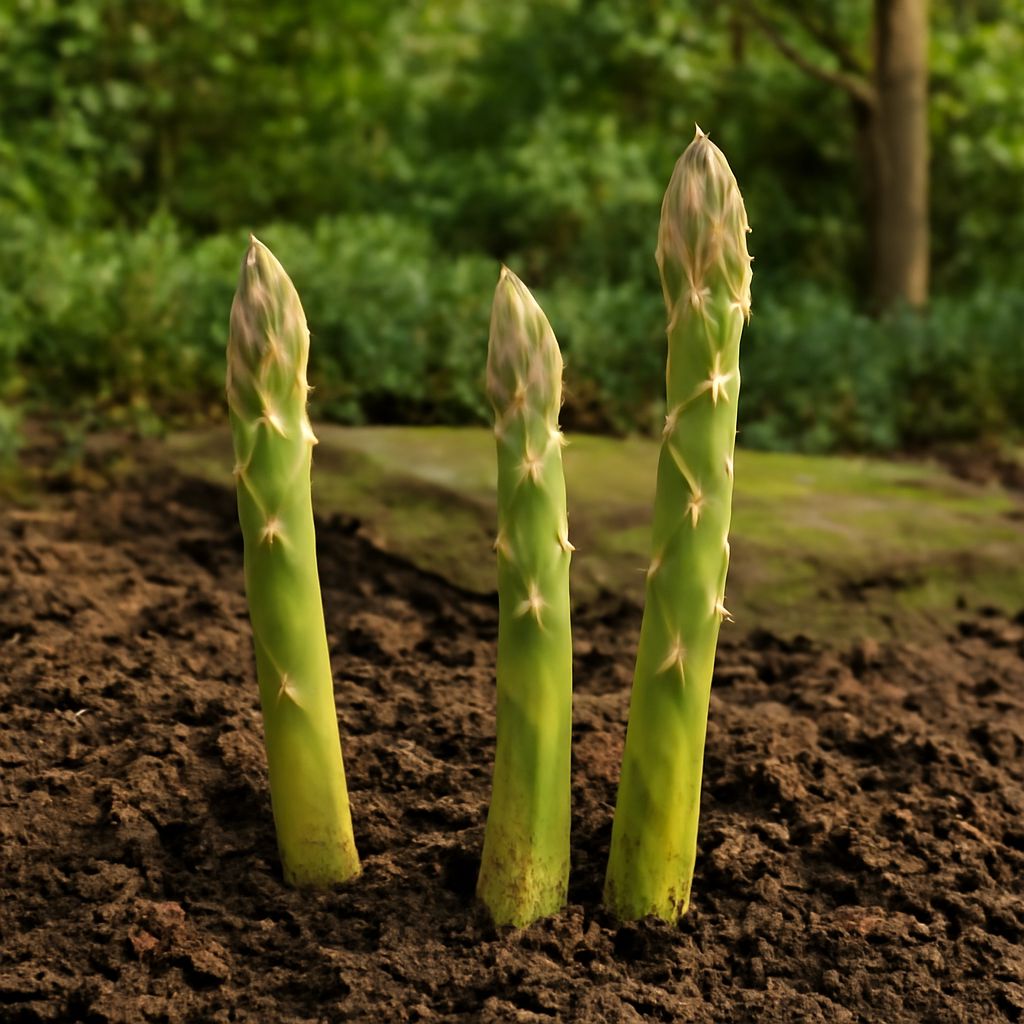
You have a sunny raised bed and want spring spears for years to come. Before buying asparagus plants, give the bed a permanent place and make sure it drains. Purchased asparagus roots, often called crowns, need room below ground and a patient start before regular harvests begin.
This guide is for edible asparagus, Asparagus officinalis. Its young spears grow into tall, feathery foliage when left uncut. Choose a place where those summer stems can stand without shading smaller vegetables.
Asparagus Roots for Sale: Choose Healthy Crowns
A crown is the underground growing point with fleshy roots attached. Inspect asparagus roots for sale for firm, plump roots and a crown that has not dried out or turned soft and moldy. Buy from a reliable nursery that identifies the variety and gives planting instructions. When asparagus roots are offered for purchase, check the shipping date: you want them to arrive near planting time, not sit in a box for weeks.
You may find asparagus plants for sale as dormant crowns or young potted plants. One-year crowns are a common choice. Some 2 year old asparagus crowns for sale are larger, but age alone does not establish quality; condition and a suitable variety matter. Keep dormant crowns cool and their roots from drying, following the supplier’s storage directions, and plant promptly when the soil is ready.
Prepare a Bed That Can Stay Put
Choose full sun and good drainage. An established bed can produce for many years, so remove perennial weeds before planting and choose a spot you will not need to dig up next season. A raised bed helps where surrounding soil drains slowly, but its own soil must drain too; water should not remain pooled around the roots.
For planting asparagus in raised beds, provide at least 12 inches of workable soil depth, with access to underlying soil if possible. This leaves room for a six- to eight-inch trench and root development below it. Loosen compacted ground beneath the bed and mix compost into the soil. If the bed sits on a solid surface or drains poorly, choose a deeper, well-drained location instead. A soil test before planting can guide lime and fertilizer decisions.
Plan about 15 to 18 inches between crowns in a row. In a wide bed, roughly 18 inches between plants in each direction gives them room; do not crowd the crowns just because they are small at purchase. Leave space to reach the middle for weeding without stepping on the soil.
Plant in the Right Season
Early spring is the usual time to plant dormant crowns, once soil is workable and no longer sticky or frozen. Planting asparagus in the fall may be possible where local winters and soil conditions allow it; follow local extension guidance and use healthy dormant crowns available at the right time. In areas with cold, wet winters or uncertain drainage, spring planting is the more dependable choice.
Dig a trench six to eight inches deep. Make a small mound of soil beneath each crown, set its growing point upright, and spread the roots over the mound. Space the crowns as planned. Cover with about two inches of soil and water gently. As spears grow, add soil gradually around them until the trench is level, avoiding burial of the growing tips.
Keep the bed evenly moist during establishment without leaving it waterlogged. A loose mulch can limit weeds and slow drying; keep it thin enough that new spears can emerge. Pull weeds carefully by hand near the crowns rather than digging deeply through their roots.
Growth, Feeding, and Space
Does asparagus spread? Each crown enlarges over time and sends up more spears from its underground growth. Plants that produce berries can also drop seeds, leading to volunteer seedlings. A well-spaced asparagus patch gives crowns room to mature and makes those volunteers easier to remove while small.
Knowing how to care for asparagus means protecting the green fern growth after the spear season. Those leafy stems gather energy for the roots and next year’s crop. Leave them standing until they turn brown after frost or die back naturally, then remove the dead growth. Check the bed for weeds and pests through the growing season and water during dry spells.
When to fertilize asparagus depends on the soil and stage of growth. Before planting, follow soil-test recommendations and incorporate amendments into the bed. In established beds, a spring feeding before spears emerge or a feeding after harvest can support growth; use local recommendations and the product label for the amount. Compost is useful organic matter, but a soil test helps identify any specific nutrient shortage.
What to Expect in the First Seasons
The first year, let every spear grow into fern so the crowns can establish. The second year, if plants are vigorous, take only a light harvest for a short period; stop if spears become thin and allow the rest to grow. In the third season, extend the harvest gradually as the bed gains strength. Once the harvest ends each year, let the fern grow through summer and feed the crowns for the next spring.