When ordinary spinach bolts in summer heat, a climbing Malabar vine can keep a leafy patch productive. This warm-season plant needs a different schedule from spring spinach: wait for settled warmth, give its stems a support, and harvest tender leaves as the vine grows.
How to grow malabar spinach in a warm garden
Ceylon spinach is another common name for Malabar spinach, a tropical climbing plant with fleshy leaves and twining stems. It is not closely related to ordinary spinach, Spinacia oleracea. The two can be used in some similar dishes, but the Malabar plant grows best in warm weather and its leaves become somewhat slippery when cooked.
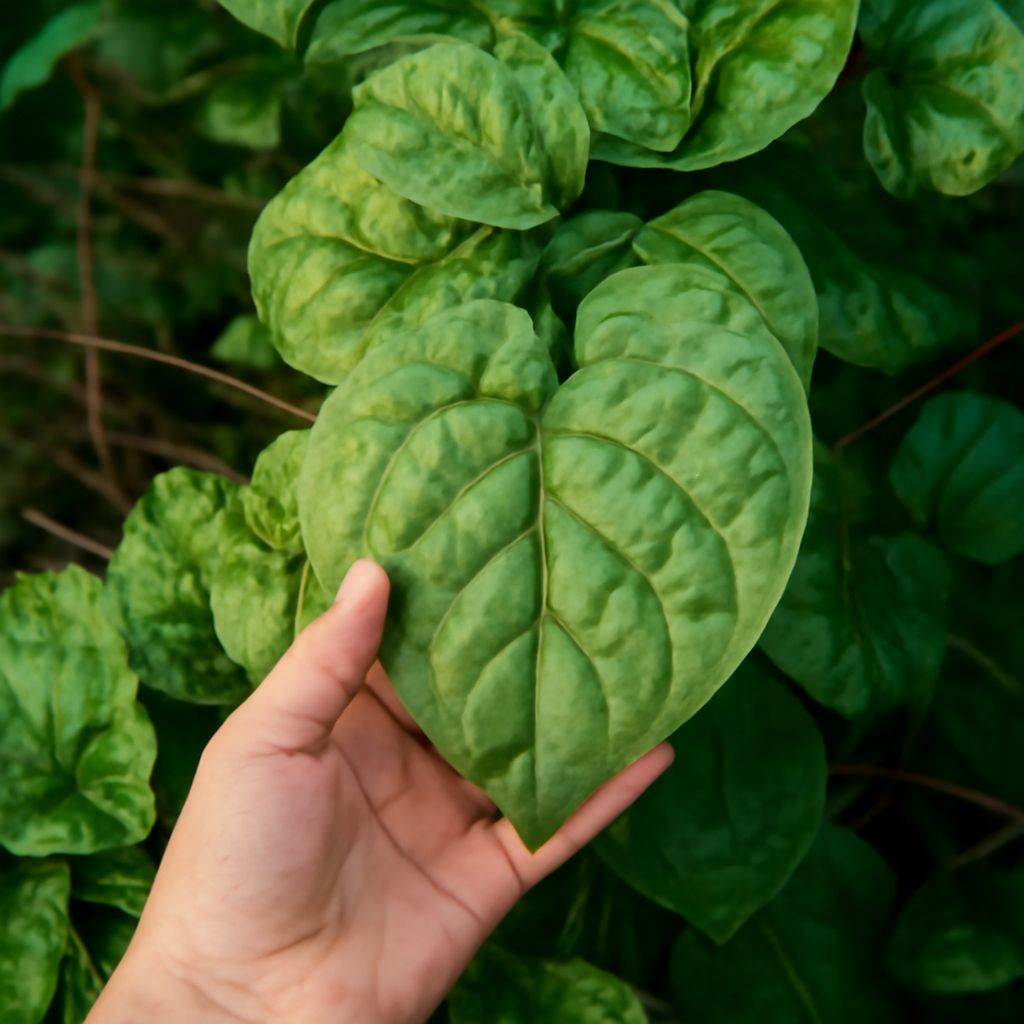
You may see the red-stemmed form labeled Basella rubra. Many botanical references treat that name as a synonym of Basella alba, while nursery labels also distinguish red and green forms by cultivar. Look for thick, heart-shaped leaves and a twining habit; the red form has especially colorful stems and leaf veins. The name on the seed packet helps you choose the form you want.
To understand how to grow malabar spinach, begin with the season. Frost damages the vines, and cool soil slows growth. In most of the United States, treat it as a summer annual and plant outside after frost danger has passed and the soil is warm. In frost-free areas it can grow for longer, though local conditions still determine its season.
Sow seeds after the soil warms
For an early start, sow Malabar spinach indoors several weeks before your last expected frost. The seeds have a hard coat and can germinate slowly; soaking them in water overnight before sowing can help. Put them in small pots of moist seed-starting mix, keep them warm, and follow the packet’s sowing depth. Germination may take two or three weeks, so keep the mix moist without leaving it soggy.
You can also sow the warm-season spinach vine directly into the garden once the ground has warmed. Thin seedlings according to the packet and leave enough space for air to move through the mature plants. If you started them inside, harden them off gradually in a sheltered outdoor spot before planting them out.
Choose full sun for vigorous growth, with some afternoon shade in very hot places if the soil dries too quickly. A fertile, well-drained soil with organic matter holds moisture without leaving the roots waterlogged. Work compost into the bed before planting, and water the seedlings in thoroughly.
Give the vine something to climb
Ceylon spinach can make a long, leafy vine, so set a trellis, fence, or sturdy netting in place at planting time. That is easier than pushing supports into a root-filled bed later. Fasten the structure securely and leave room to reach both sides for picking.
As the Malabar spinach plant grows, guide young stems toward the support. They twine around suitable material, but a loose tie can help a wandering stem find its way. Use soft ties and leave room for the stem to thicken. If a vine reaches the top, pinch its tip to encourage branching and keep the harvest within reach.
A container can work for the climbing Ceylon green if it has drainage holes, enough volume for roots, and a stable support. Pots dry more quickly than garden beds, especially in sun and wind. Check the soil regularly and place the container where a full, leafy trellis will not easily tip over.
Water steadily and pick often
Keep the soil evenly moist while the plants are establishing and during dry weather. Water deeply when the soil begins to dry below the surface, rather than giving only the leaves a quick sprinkle. A layer of organic mulch helps slow evaporation; keep it a little away from the stems.
Growing Malabar spinach for leaves is easier when tender shoots are harvested regularly. Pick young leaves individually, or snip the tips of vigorous vines, leaving enough foliage behind for the plant to continue growing. Frequent modest harvests encourage branching and keep the vines manageable. Rinse the harvest before use.
The red-stemmed Basella vine can flower and set dark berries as the season progresses. Berry juice stains, and ripe fruit can drop seeds where you may find seedlings later. Remove flower spikes or berries if you want fewer volunteers, and check local guidance before disposing of mature seed. In warm climates, keep the plant within the space you can tend.
If leaves yellow or growth stalls, check soil moisture and drainage first. A saturated bed can harm roots, while repeated drought makes tender leaves harder to maintain. Look under leaves for pests and remove badly damaged growth. Avoid a heavy fertilizer response until you know what the plant needs.
Harvest through the end of the season
For continued production from this heat-loving Malabar green, take a few young leaves from several stems rather than stripping one vine bare. Before cold weather arrives, pick the usable tender leaves and tips. Once frost has damaged the plant, remove the vines and support ties, and collect mature berries if you do not want seed left in the bed.