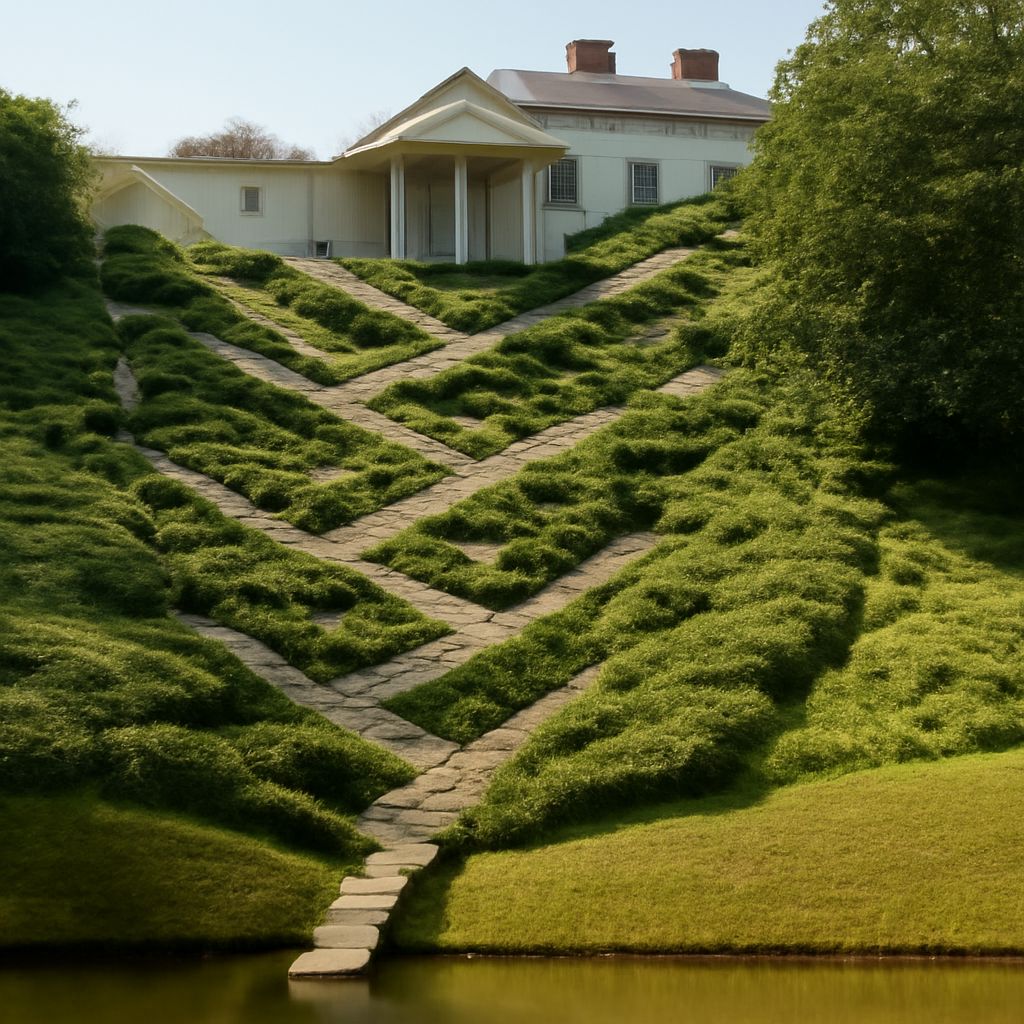
When we think of gardens, we often imagine serene landscapes filled with colorful flowers and lush greenery. But what if a garden could challenge our perceptions of space, time, and design? The Garden of Cosmic Speculation does just that, transforming traditional garden concepts into a breathtaking fusion of art and science. Let’s debunk the myth that gardens are merely ornamental by delving into this extraordinary example of design innovation.
Introduction to the Garden
The Garden of Cosmic Speculation is unlike any other. Located in Scotland, this private garden captivates visitors with its unique blend of nature and scientific principles. Created by architect and designer Charles Jencks, it spans over 30 acres and serves as a living testament to the interplay between cosmic forces and landscape design.
Design Philosophy
The garden’s design philosophy challenges traditional notions of what a garden should be. Inspired by scientific concepts like black holes, fractals, and DNA, the Garden of Cosmic Speculation encourages us to see the universe in our backyard. Its design invites contemplation and sparks curiosity about the laws that govern our world.
Jencks’s approach is both artistic and intellectual, using earth, water, and sky to reflect scientific theories. The garden becomes a canvas where natural elements are shaped to evoke the mysteries of the cosmos. This philosophy turns a walk through the garden into an exploration of time and space.
Key Features and Attractions
The garden is a treasure trove of features that captivate and inspire. Among its 40 major areas, the DNA Garden stands out, illustrating the double helix structure through sculpted hedges. This feature brings the abstract concept of genetics into a tangible form.
Another highlight is the Black Hole Terrace, where spiraling paths mirror the swirling forces of a black hole. The bridges and staircases in the garden are not just functional but also serve as metaphors for cosmic phenomena, guiding us through a journey of speculation and wonder.
Every section of the Garden of Cosmic Speculation is meticulously crafted to engage our senses and intellect. From the artificial lakes to the carefully structured hills, each element is a nod to the intricate dance of the universe.
The Visionary Behind the Garden
Charles Jencks, the mastermind of the garden, was an architect, theorist, and critic known for his work in postmodern architecture. His vision for the Garden of Cosmic Speculation was to create a landscape that reflects the universe’s complex beauty and order. Jencks believed that gardens could be more than places of leisure; they could be arenas for intellectual exploration and discovery.
Jencks’s work on the garden involved collaboration with scientists and artists, enriching the design with diverse perspectives. His legacy lives on in this remarkable garden, which continues to inspire architects, scientists, and garden enthusiasts worldwide.
Visiting the Garden
The Garden of Cosmic Speculation is open to the public only one day a year, making it a sought-after destination for those eager to experience its unique charm. During this special event, visitors can explore the garden’s paths and marvel at its intricate designs.
When planning a visit, it’s essential to check the specific opening date and prepare for a journey that is both enlightening and visually stunning. The garden’s setting in Scotland adds to its allure, offering a picturesque backdrop to this cosmic wonderland.
Conclusion
The Garden of Cosmic Speculation challenges our perceptions of gardens and design, inviting us into a world where art meets science. It stands as a testament to the power of creativity and the endless possibilities when we dare to speculate about the cosmos. As we wander through its paths, we are reminded of the intricate connections between nature and the universe, sparking our imagination and deepening our appreciation for the world around us.