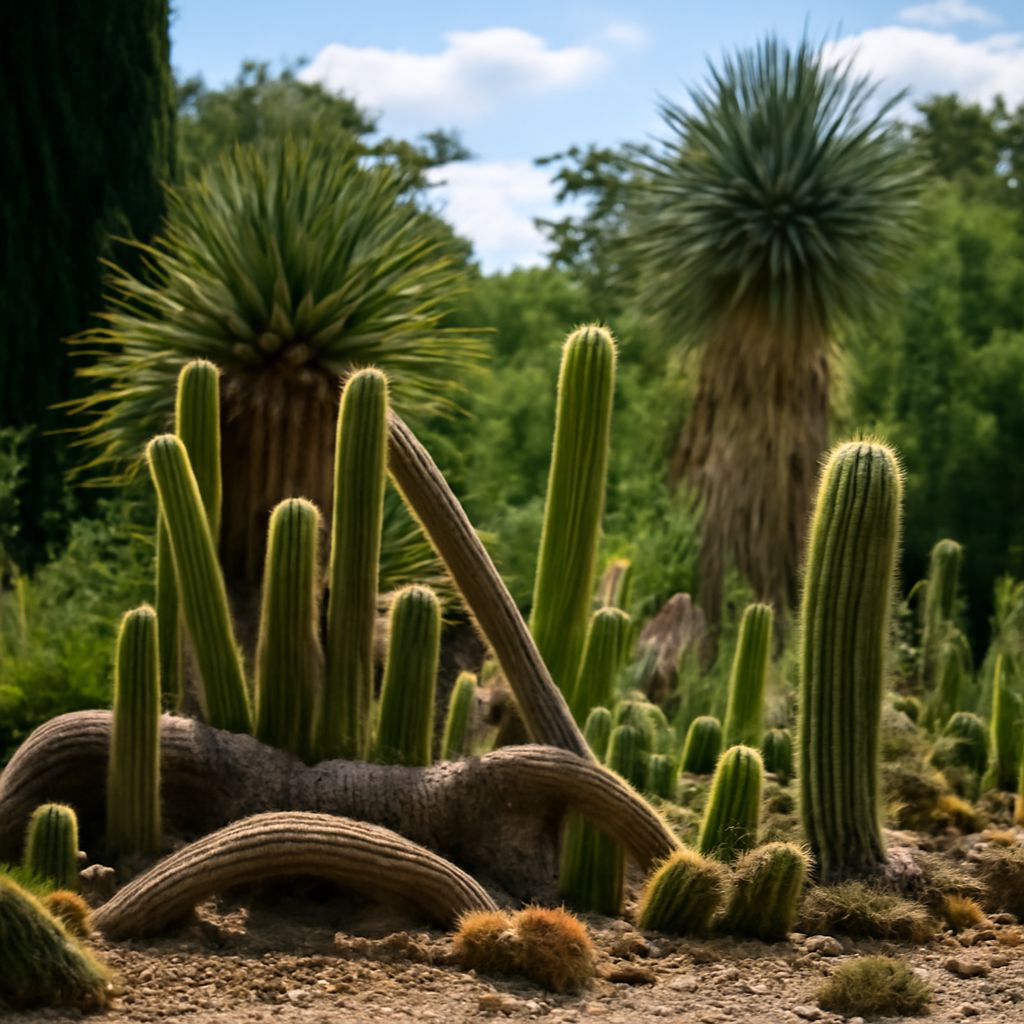
When people think of a garden, lush green landscapes and colorful blooms often come to mind. However, the Stanford Cactus Garden challenges this common perception by showcasing the unique beauty of cacti and succulents. This specialty garden draws cacti garden enthusiasts from around the world, curious to discover this living masterpiece of design. Let’s delve into what makes the Stanford Cactus Garden an exquisite example of horticultural artistry.
Introduction to the Stanford Cactus Garden
The Stanford Cactus Garden, or the Arizona Garden, is a hidden gem nestled within the Stanford University campus. Originally designed in the late 19th century, this garden was the brainchild of renowned landscape architect Rudolph Ulrich. It represents an early attempt to cultivate a diverse collection of cacti and succulents outside their native arid environments, inviting visitors into a world where desert plants are the stars.
History and Evolution of the Garden
The Stanford Cactus Garden was commissioned by Jane and Leland Stanford during the 1880s. Its design focused on showcasing the extraordinary diversity and resilience of cacti and succulents. Over the years, the garden has experienced periods of neglect and restoration. Today, thanks to dedicated conservation efforts, it stands as a testament to the university’s commitment to preserving botanical history.
Initially, the garden served as a space for research and education, offering insight into drought-resistant plants. As the garden evolved, it became a sanctuary for cacti garden enthusiasts, providing a peaceful retreat for those who admire these resilient plants.
Design Elements and Features
The design of the Stanford Cactus Garden is both intentional and organic. Ulrich’s vision incorporated winding pathways, creating an immersive experience for visitors. These paths guide guests through an array of cacti and succulents, each placement carefully considered to mimic their natural habitats.
Key features include strategically placed rockeries that provide both a home and a backdrop for the plants. The garden’s layout takes advantage of sunlight and natural drainage, crucial for the health of the cacti and succulents. This thoughtful design not only supports plant health but also enhances the visual appeal of the garden.
Types of Cacti and Succulents
Our exploration of the Stanford Cactus Garden reveals a remarkable collection of cacti and succulents. From towering saguaro cacti to the compact Echeveria, each plant offers a unique glimpse into the diverse world of desert flora. This specialty garden highlights species from various regions, showcasing their adaptability to different climates.
Some notable species include the golden barrel cactus, known for its striking symmetry, and the prickly pear, with its vibrant pads and flowers. The garden also features a variety of succulents, such as agaves and aloes, which add texture and color to the landscape. For cacti garden enthusiasts, this collection is an invaluable resource for studying plant diversity.
Visitor Information and Tips
For those planning to visit the Stanford Cactus Garden, it is important to note that the garden is open year-round, with free admission. The best time to visit is during spring or early summer when many of the cacti and succulents are in bloom. To fully appreciate the garden, we recommend setting aside at least an hour for exploration.
Visitors should wear comfortable walking shoes and bring water, as the garden’s pathways can be uneven. Photography is encouraged, but remember to respect the plants and pathways, maintaining the garden’s pristine condition for future visitors.
Conservation and Educational Efforts
The Stanford Cactus Garden is deeply committed to conservation and education. Efforts to preserve rare and endangered species of cacti and succulents are ongoing, ensuring that these plants continue to thrive for generations to come. The garden also serves as an educational resource, offering workshops and guided tours to engage and inform visitors about the importance of desert flora conservation.
Through these initiatives, the garden not only provides a haven for plants but also raises awareness about environmental sustainability. By understanding and appreciating these unique ecosystems, we can contribute to their preservation and celebrate their role in the planet’s biodiversity.


