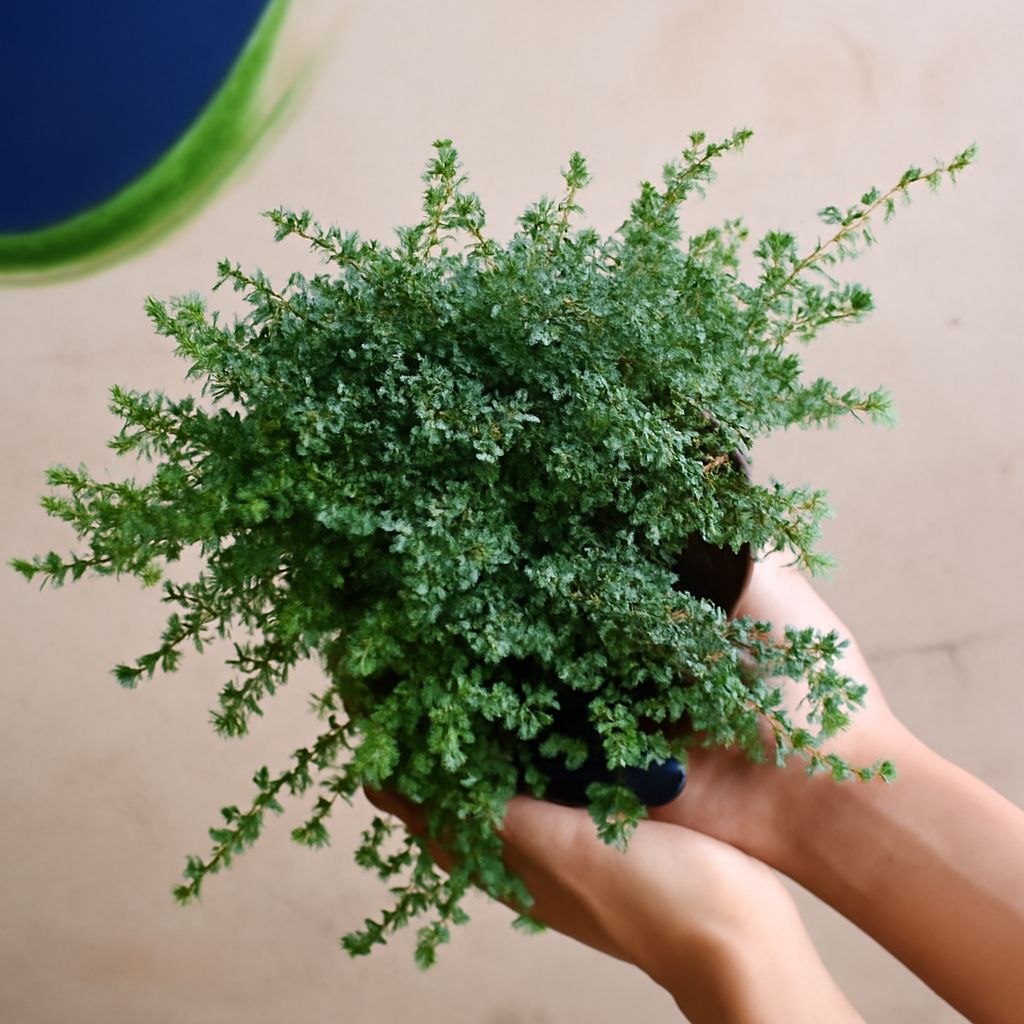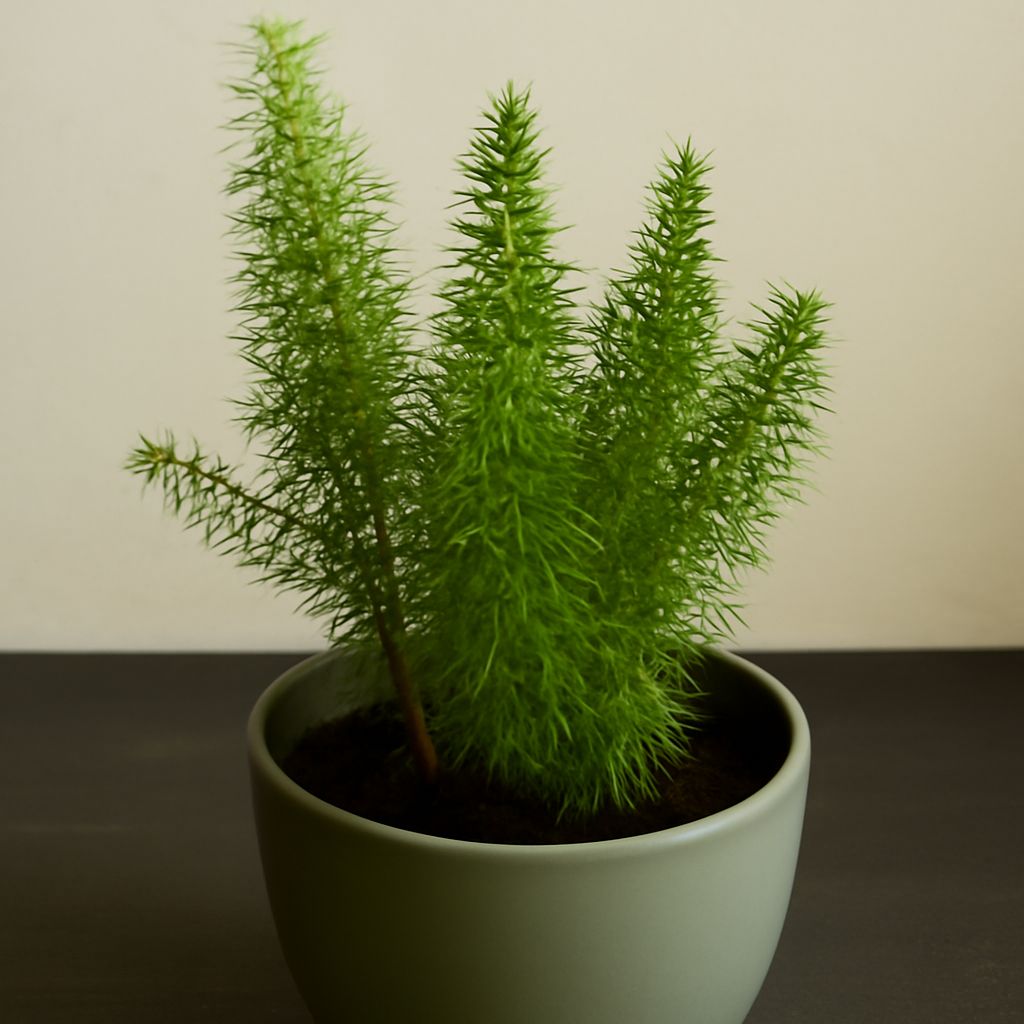
Choose by the shape of the stems and the space you have. A trailing ornamental asparagus can spill from a basket, while the foxtail form stands in dense, upright plumes. The plant sold as Asparagus densiflorus includes forms with both habits, so read the full label before choosing a pot or garden position.
The foxtail often appears under names such as Meyeri or Myers. Its soft-looking cylinders are distinctive, but leave room around the pot for them to spread. These plants are called asparagus ferns because of their foliage; they are flowering plants, not true ferns.
Asparagus Meyeri and the Foxtail Shape
Asparagus meyeri is one name used for the foxtail form, also listed as A. densiflorus ‘Meyeri’ or ‘Myersii’. Names and spellings vary among sellers. Look for dense, tapered plumes rising from the base, rather than relying on a common name alone. The fine green structures along the stems are modified branches that give the plant its feathery appearance.
A myers asparagus fern makes a strong upright accent in a pot, beside a shaded entry, or in a suitable warm-climate bed. Allow space for a clump that can reach roughly one to three feet tall and spread wider, depending on conditions. A mature Myers foxtail may arch outward as well as rise, so a narrow shelf can become crowded. A container on a low stand gives its form room to show.
The Meyeri asparagus form also suits a grouping with broad-leaved plants. Their larger leaves make the fine texture easier to see. Choose companions with similar light and water needs, or keep each in its own pot so you can adjust care separately.
Trailing and Arching Forms
Asparagus densiflorus ‘Sprengeri’ is commonly sold as a spreading or arching type. Its longer stems can reach over the side of a basket or container, making it useful where you want a looser outline. Give the plant enough clearance below and beside the pot; stems that hang across a walkway are easy to catch and break.
A trailing asparagus fern needs a stable container as it grows. Check that a hanging hook can support the pot after watering, when it is heaviest. Indoors, place the basket near a bright window with protection from strong direct afternoon sun. Outdoors, a sheltered porch or lightly shaded position is often easier to manage than an exposed, hot wall.
The dense-flowered asparagus and related plants can develop small flowers and berries. Keep them out of reach of children and pets: the berries and other parts can cause illness if eaten, and sap can irritate skin. Some stems have small spines, so handle the plant with care when moving it.
The Ming Form
Asparagus retrofractus, often called Ming asparagus fern, has a different silhouette. Its branching stems carry tufts of fine foliage that look like small green pom-poms, with more open space between them than on the foxtail. It can grow several feet tall, so choose a floor pot or a garden position with vertical room rather than a low shelf.
A Ming asparagus plant works where its airy branching can be seen against a plain background. Check the botanical label and mature dimensions before buying: a seller’s small specimen may not show its eventual height. Like its relatives, it is an ornamental plant, not a vegetable crop or a true fern.
Light, Water, and Outdoor Placement
Give indoor plants bright, indirect light. Outdoors, partial shade is a practical starting point, particularly in hot climates where hard afternoon sun can scorch foliage. Light needs vary with climate and plant form: a bright porch in a cool region is different from a south-facing wall in summer. If growth is sparse, move the pot gradually to a brighter protected place; if foliage scorches, offer more shade.
Use a pot with drainage holes and a well-drained mix. Water thoroughly until excess drains, then let the upper soil begin to dry before watering again. Empty water collected in a saucer. In cool or low-light conditions the mix dries more slowly, so check it with a finger rather than watering by the calendar. Established plants tolerate some dryness, but a young or pot-bound plant still needs regular attention.
Outdoor suitability depends on winter cold and the particular plant. In colder areas, keep the pot indoors through freezing weather. Before putting ornamental asparagus in the ground in a mild region, check local invasive-plant guidance for the exact botanical name: some related types spread into natural areas. A pot helps contain roots, but berries can still be carried away, so remove them if local guidance calls for it.
Choose a trailing form for a basket with room below, a Myers asparagus plant for upright plumes, or the Ming form for a taller, open display. In each case, set it where it receives bright light without harsh afternoon exposure and where you can reach the pot to check the soil.