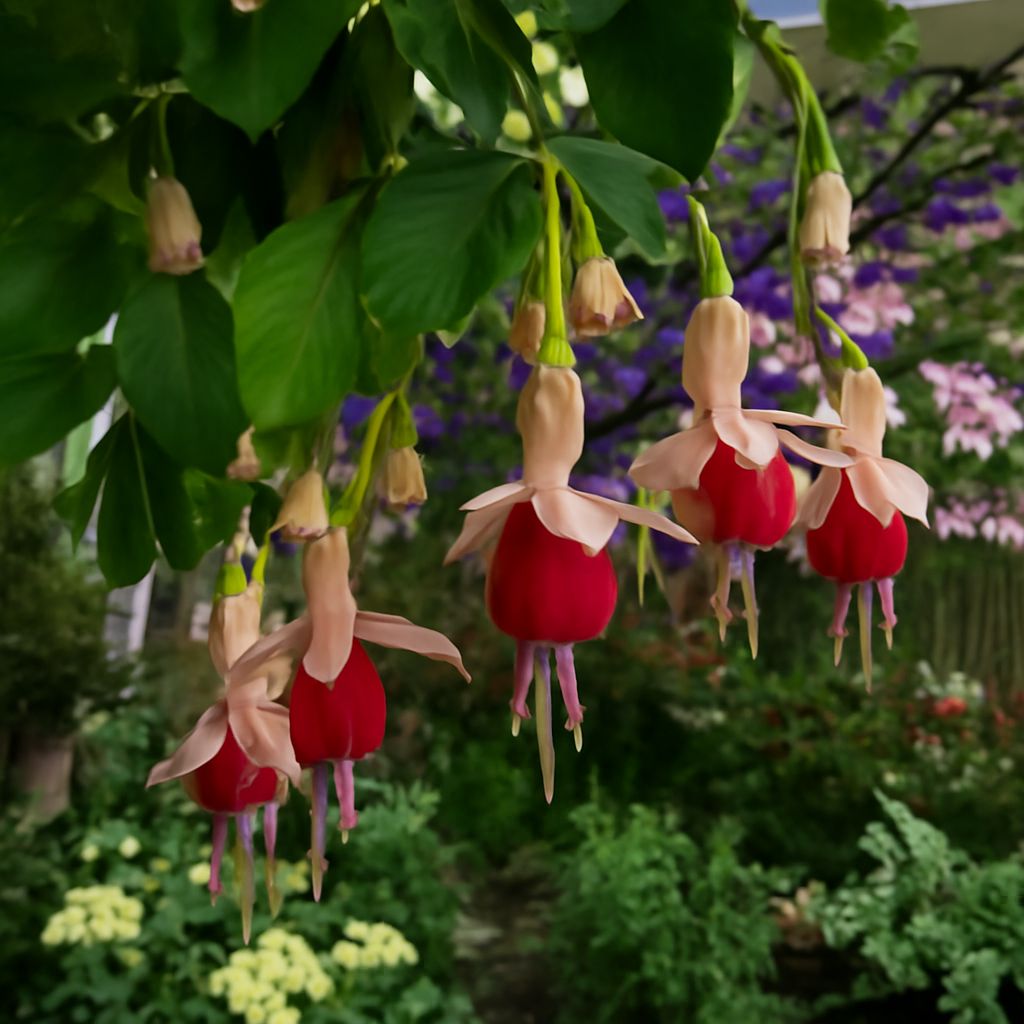
For flowers on a porch this season, a healthy potted fuchsia gives you a head start. For the pleasure of raising young plants and seeing how they turn out, seed is an option that calls for more time and space. When comparing fuchsia plants you can buy with a packet of fuchsia seed, begin with the result you want and the place where it will grow.
A trailing basket and an upright shrub may both carry the fuchsia name, but they fill a garden differently. Read beyond the flower photograph: the plant’s habit, mature size, tolerance of cold, and needs in summer matter as much as its color.
Fuchsia Seeds: Time and Variety
A packet of seeds for fuchsias offers the experience of raising seedlings from the beginning. Fuchsia seeds must germinate and grow into plants before they can flower, so they are a slower choice than an established specimen. Allow room for pots, light, and regular attention while the fuchsia seedlings develop. If you need a full basket for an upcoming gathering, buy a growing plant instead.
Seeds may produce variation in flower color or plant form, particularly when the parentage is uncertain. A photograph on a packet can show the sort of flower to expect without promising that every seedling will match it. If a particular named cultivar and its appearance matter to you, look for a plant sold under that cultivar’s name. Vegetatively propagated plants generally preserve the parent’s traits more reliably than seedlings.
When shopping for fuchsia seeds, check the species or variety, the number of seeds, and any information about the parent plants. Look for a packed-for date or other freshness information and clear germination directions. A mixed packet offers surprises; a vague listing makes choosing shape or color harder.
A packet of fuschia seeds may contain a single type or a mixture. Choose a fuschia seed mix if varied seedlings appeal; check whether its fuschia seed varieties trail or grow upright.
What a Growing Plant Gives You
Among fuchsia plants for sale, a rooted start, a small nursery pot, and a full hanging basket represent different stages of growth. A young fuchsia plant bought as a rooted start costs you more growing time than a mature basket but can be easier to shape and move into your own container. A larger fuchsia available for purchase gives a quicker display; check its dimensions so it fits the space you have.
Look for a named variety if the flower pictured or its growth habit is important. Ask whether the plant offered is the same cultivar shown and what size pot will arrive. A photo of a mature basket does not tell you the size of a young start. If the listing says only “assorted,” treat the exact color and form as a surprise unless the seller confirms them.
Inspect fuchsia plants at a nursery before buying. With an online order, read the shipping window and the seller’s policy for damaged plants. A long trip in extreme heat or freezing weather can stress a live plant; choose a delivery period suited to your local conditions and be ready to unpack and water it when it arrives.
Match the Habit to Your Space
Trailing varieties spill over the edge of baskets and window boxes. Upright types suit pots or beds where their branching shape can be seen. Check both height and spread at maturity, then leave enough room around the plant for air and access to water. A tiny start may eventually cover much more ground than its nursery pot suggests.
Fuchsias commonly prefer partial shade and protection from hot afternoon sun. A sheltered porch with gentle morning light can suit a hanging basket; a hot, exposed wall may dry it too quickly. Conditions vary by cultivar and climate, so compare the seller’s light advice with the actual hours of sun in your chosen spot. In hot, humid regions, look for a variety described as suited to those conditions and plan for shade.
Soil or potting mix should hold moisture while draining freely. A basket with drainage holes needs regular checks because its mix can dry faster than a garden bed. If you cannot water often during hot weather, choose a location and container that make the job manageable. A potted plant also lets you move it into shelter when the weather turns.
Inspect Before You Buy
Healthy leaves should look firm and reasonably even in color, with sturdy stems and fresh growth. Look under leaves and where they meet the stems for insects, sticky residue, webbing, or distorted growth. Avoid a plant with widespread spotting, severe wilting, or soft, damaged stems. A few spent flowers are less concerning than unhealthy leaves and roots.
If possible, check that roots are pale and firm, not brown and mushy. Soil that stays saturated can damage roots; a pot so full of roots that little mix remains may need prompt attention. With fuchsia plants for sale online, request a description of the actual pot size and condition if the listing is unclear.
Make the Choice Fit the Season
Choose a ready-grown fuchsia when you want a recognizable variety and flowers sooner, or when the space calls for a specific trailing or upright form. Choose seed when you have a place to raise seedlings and are happy to wait and accept variation. Before either purchase, match its mature size and light needs to your site, and check its cold tolerance against your winter: tender plants will need protection or a frost-free place to overwinter.