Measure the height available in your bed before choosing a tickseed. Large-flowered coreopsis can make a bright mound in the middle of a border, while tall tickseed needs room at the back or in a meadow. Both bear yellow flowers, but their scale changes the way they fit a garden.
Tickseed is a common name for several Coreopsis species. Check the botanical name on the label, then compare the plant’s height, soil moisture needs, and spread with your site. A low edging plant and a towering prairie flower should not be treated as interchangeable.
Coreopsis Tripteris for Height
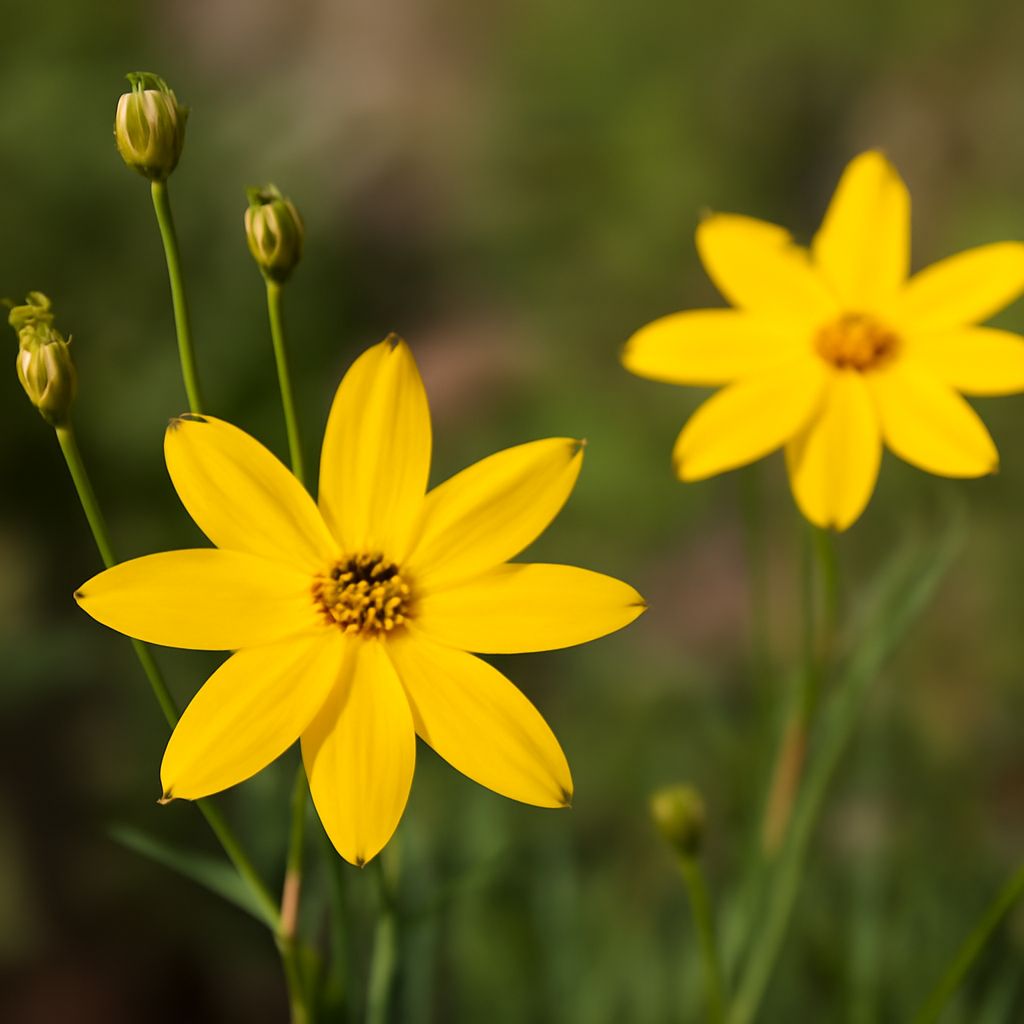
Coreopsis tripteris, or tall tickseed, rises on upright stems with yellow flowers in summer and fall. It often grows around four to five feet tall and can reach considerably higher in favorable conditions. Give it the back of a sunny border or a spacious naturalistic planting where its height will not hide smaller neighbors.
This tall coreopsis tolerates a range of soils and moisture, from moderately dry to moderately wet. It can seed freely, so leave room for seedlings or remove unwanted volunteers. If you prefer a tidy, low planting beside a path, choose a shorter species; a mature tall tickseed has a different presence from a compact nursery pot.
Large Flowers for a Sunny Border
Coreopsis grandiflora, commonly called large-flowered tickseed, usually grows around one and a half to two feet tall and wide. Its yellow, daisy-like flowers stand above the foliage from spring into summer, sometimes longer. Set it where the blooms can be seen among lower foliage and where the soil drains well.
This large-flowered species accepts a range of soils and generally prefers medium to dry moisture once established. Water a new plant regularly as it roots in, then adjust to rainfall and the soil rather than keeping the bed constantly wet. Rich, heavily watered soil can produce weak, floppy growth in tickseeds; a sunny position and reasonable drainage are better foundations for a sturdy border.
Coreopsis grandiflora can self-sow. If you welcome a loose garden, allow some seed heads to remain. If seedlings appear where you need a clear edge, pull them while small. Deadheading spent blooms can encourage a longer display, but leaving some later seed heads also provides seed for visiting birds.
Pink Flowers for Moist Ground
Pink coreopsis, Coreopsis rosea, brings a different color and finer texture to the group. Its pink flowers rise above narrow foliage on plants often around one to two feet tall. In a sunny bed with consistently moist soil, it can make a softer contrast to broad-leaved companions.
Give this pink tickseed room to spread and keep an eye on its edges. It is better suited to a reliably moist site than the driest, fastest-draining corner reserved for drought-tolerant plants. Water during dry periods as needed to keep the soil from drying out completely, especially while the plant establishes. Check the named variety’s label for its mature spread and local hardiness.
A Dwarf for the Front Edge
Coreopsis auriculata Nana is the compact selection correctly written Coreopsis auriculata ‘Nana’. Its low foliage and yellow flowers suit the front of a sunny border, a path edge, or a small rock garden. Flowering stems are commonly under a foot tall, though conditions and sources vary. Allow its low growth room to spread rather than setting it directly against a walkway.
The dwarf earleaf tickseed prefers moist, well-drained soil and sun to partial shade. It works where taller stems would obscure a view or lean across a path. A small group can make a continuous patch of color, while gaps between new plants leave room for their mature spread.
Lanceleaf for a Meadow or Simple Border
Lanceleaf tickseed is Coreopsis lanceolata, a separate species with yellow flowers and narrow, lance-shaped leaves. It commonly reaches about one to two feet tall. Use it in a sunny meadow-style bed or an informal border where its flowers can mingle with grasses and other plants of similar needs.
Allow for reseeding if you want a natural effect, and remove young volunteers if they move beyond the chosen space. As with the large-flowered type, good drainage and adequate sun matter. Compare nursery labels carefully: related yellow flowers may look alike in a photograph while their mature height and growth habits differ.
Choose for the Site
For a tall background in soil that ranges from moderately dry to moist, select the upright prairie species. For a middle border with good drainage, choose the large-flowered plant or lanceleaf. Where soil stays reliably moist, consider the pink-flowered species; for a low path edge, choose the dwarf. Check your site’s sun, winter conditions, and the named plant’s mature spread before setting it in the ground.