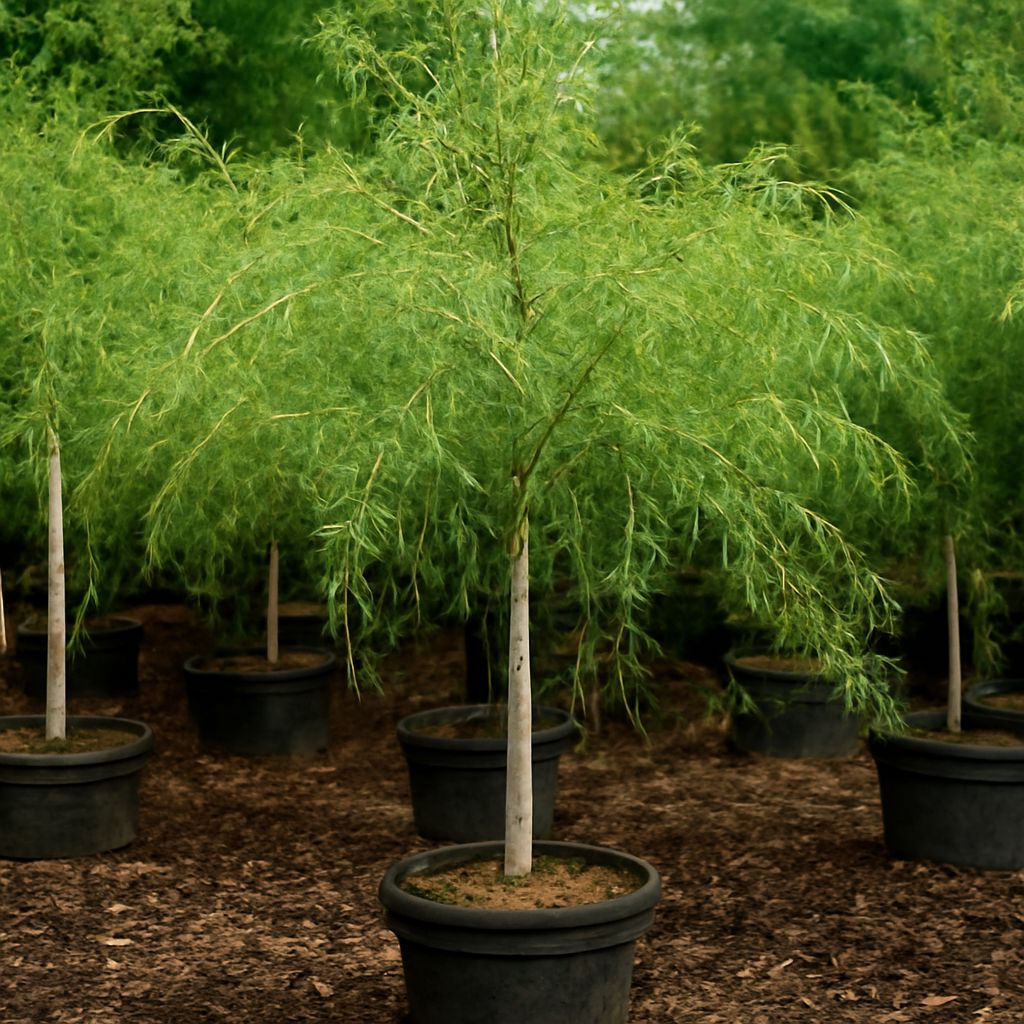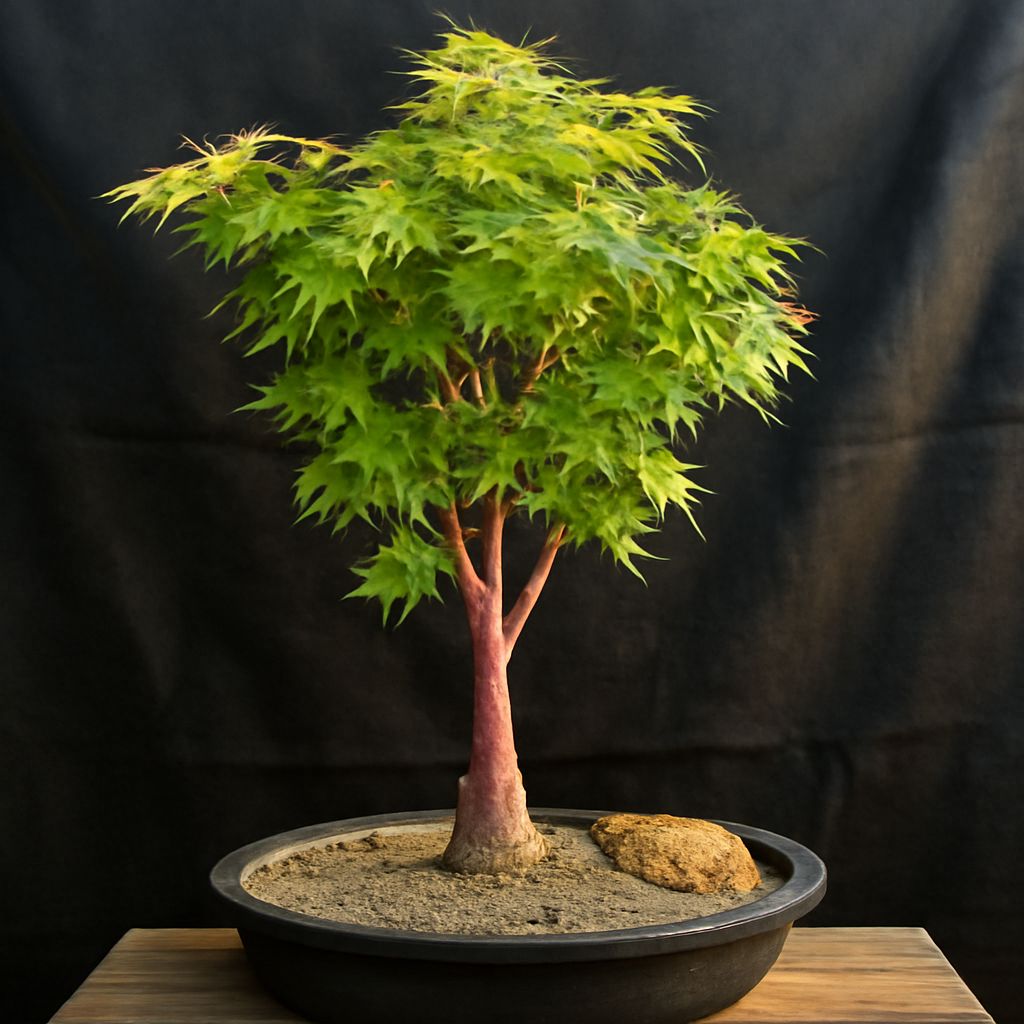
A maple planted where you pass in winter can show its colored branches when the rest of the garden is quiet. The same tree hidden behind an evergreen screen may be healthy but hard to appreciate. A Japanese maple with coral bark needs a place where its young stems can be seen and its crown can spread.
The cultivar often sold as Acer palmatum ‘Sango Kaku’ brings more than a winter display. Its leaves change through the seasons, and its upright shape gives a small garden a focal point. Before choosing a spot, allow for the mature tree rather than judging it by the nursery pot.
Acer Sango Kaku: What the Name Means
The full botanical name is Acer palmatum ‘Sango Kaku’. Acer identifies the maple genus, palmatum the species, and the quoted name identifies the cultivated selection. Oregon State University gives the Japanese name’s meaning as “coral pillars”; other sources translate it as “coral tower.” Both descriptions point to the bright upright stems for which the tree is grown.
You may see Acer Sango Kaku written with the cultivar name joined as ‘Sangokaku’. Check the full label when buying: other Japanese maples can have attractive bark, but their mature shape and color may differ. Ask the nursery about the tree’s expected size and local suitability, particularly if it is displayed simply as a coral-barked maple.
The Bark Changes With the Seasons
The strongest color appears on young twigs and branches, especially in fall and winter after the leaves drop. First- and second-year stems can be vivid coral red; older branches gradually lose that bright tone. The effect is a network of fine colored lines rather than an entire mature trunk staying uniformly red.
Cool weather and a clear view through bare branches make the color easy to notice. A dark evergreen hedge or a plain wall behind the tree can provide contrast. Leave enough distance from that background for air and for the crown to develop. A coral bark japanese maple tree near a window can bring winter color into view, provided the site still has the space and conditions the roots need.
The japanese maple bark is only one part of the seasonal display. New leaves may emerge with reddish tones, become light green through summer, and turn yellow with touches of red in fall. Leaf color varies with exposure and weather, so look at the whole tree and its setting rather than expecting a fixed shade on every branch.
Give the Mature Tree Space
A coral bark japanese maple tree can reach about 20 to 25 feet tall and 15 to 20 feet wide. Growth is generally slow to moderate, and a young specimen will take time to fill that space. Measure outward from the proposed trunk position and picture the mature crown before deciding how close to place it to a wall, path, or neighboring plant.
The upright form can work in a courtyard or near a patio when there is adequate clearance. Avoid placing it where branches will eventually obstruct a doorway or press against the house. Check overhead for wires, and locate underground utilities before digging. A small tree at purchase is still a long-term part of the garden’s structure.
A Sango Kaku maple can also serve as a single specimen at the edge of a bed. Give it an uncluttered outline so its branching remains visible in winter. Low plants can soften the ground around it, but leave access for watering and avoid packing vigorous competitors against the trunk.
Light, Soil, and Shelter
This selection grows in sun to partial shade. Sun can bring out bright color in the young bark of a Japanese maple, but intense afternoon sun and drying wind may scorch tender leaves, especially in hot regions. Morning sun with afternoon shade is a practical compromise where summer heat is strong. In cooler locations, a sunnier position may suit it; judge the site by local conditions and the nursery’s advice.
Choose moist, well-drained soil. Water should soak in and move through the root zone rather than stand for days. Keep a newly planted tree watered during dry spells, checking the soil below the surface before watering again. A layer of mulch over the root area helps moderate moisture and temperature; keep it away from the trunk.
Shelter from strong wind is valuable for the foliage and young growth. A building or fence can provide protection, but avoid a narrow pocket that traps heat or leaves no room for the canopy. Check the plant’s hardiness information against your local winter conditions and ask a local nursery or extension office if your garden lies near the edge of its range.
Place It for the Winter View
Before planting, stand at the window or along the path from which you hope to see the branches. Mark the proposed trunk position and the mature width around it. Choose a background that lets the maple’s coral stems show, then make sure the tree has well-drained ground, suitable light, shelter, and clear space to grow into that view.