You are standing at a nursery bench, choosing an aster with blue flowers for an open space in the border. A neighboring label mentions an aster that blooms around frost, but its flowers are white. Read the species names before you buy: these plants differ in color, height, and the amount of sun they need.
A sunny border and an old botanical name
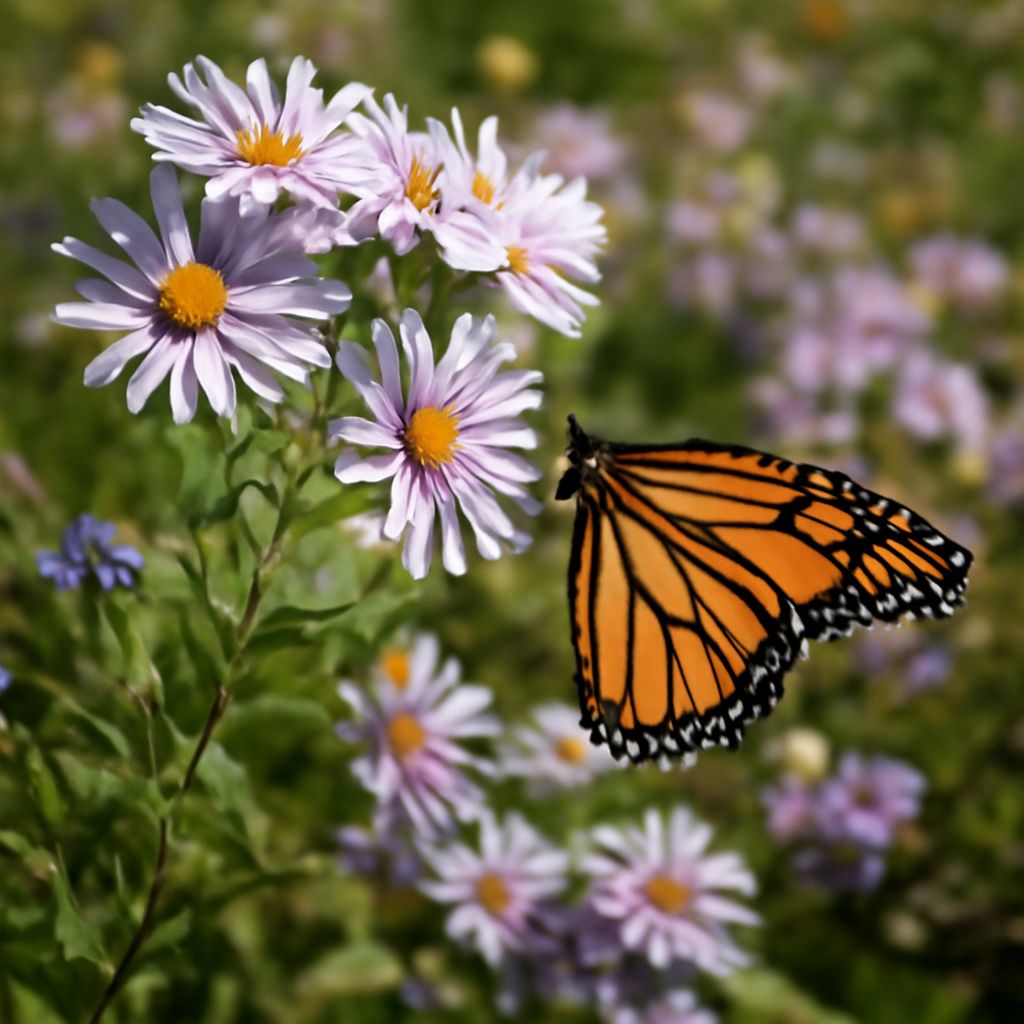
The sky blue aster is Symphyotrichum oolentangiense, a North American perennial with branching sprays of blue to lavender flowers in late summer and fall. It often reaches roughly 2 to 3 feet tall. Give it sun to light shade and well-drained soil; it can suit a sunny border or a loose, naturalistic planting where its fine stems can mingle with grasses.
An older label may call the same plant Aster azureus. Kew’s plant database lists that name as a synonym. If two nursery pots carry those different scientific names, check the rest of each label for a cultivar and growing size before treating them as different plants. The sky-blue flowering aster has a loose habit, so leave enough space for its branching stems instead of placing it at the very edge of a narrow path.
Frost aster: A cloud of small white flowers
The frost aster, often identified as Symphyotrichum pilosum, makes many small white flower heads in late summer and fall. Its branching, sometimes sprawling growth gives a meadow or informal border a different look from a single compact mound. Plants can spread and seed themselves, so leave space around them and check seedlings in spring if you want a tidy bed.
This late-flowering aster known for frost-season bloom is useful where you want a light-colored backdrop to grasses and other fall flowers. Choose a sunny place with room for its mature spread, and confirm the scientific name on the plant label: common names can vary among sellers. White flowers may be just right for the bed, even if you first came looking for blue.
Silvery foliage or a woodland edge
The silky aster, Symphyotrichum sericeum, has narrow leaves with fine, silvery hairs and lavender-purple to bluish flower heads. Its foliage gives the planting interest before bloom. Set this silky-leaved aster in a sunny, well-drained site where its texture can be seen alongside low grasses or other prairie plants. It is a separate species from the sky-colored plant above.
The heart leaved aster, Symphyotrichum cordifolium, is also called blue wood aster. Its lower leaves have a heart-shaped base, and loose sprays of pale blue to violet flowers appear in late summer and fall. This aster with heart-shaped leaves tolerates partial shade and works along a woodland edge. North Carolina Extension notes that it can reach 4 feet tall and readily self-seed. Give it room among shrubs or taller perennials, and remove seed heads if you need to limit volunteers.
The two have different characters: the first brings silvery leaves to an open bed; the second carries airy flowers above foliage in light shade. In a rich, sheltered spot the woodland species may grow taller than expected, so place it behind lower plants rather than hiding it at the front.
An alpine aster for the front of the bed
Aster alpinus stays much shorter than the taller fall-flowering species. This alpine species flowers in late spring or early summer, with daisy-like heads in shades that vary by selection, including blue-purple, pink, and white. The alpine aster is a good candidate for a rock garden or the front of a border where the soil drains freely. Check the named selection for its height and color; allow its small mound enough open space to avoid being buried by vigorous neighbors.
Season is part of the choice. The low alpine plant gives color early, then leaves the later show to taller perennials. Asters with blue or lavender rays can be combined across seasons, but each plant needs a place suited to its own mature shape.
Set the bed up for healthy growth
Check how much direct sun reaches the bed in summer and whether water remains after a hard rain. Open, well-drained ground suits the sun-loving species; the woodland plant is a better starting point for partial shade. Match hardiness and local growing conditions to the named plant before buying, since nursery tags may describe a broad range.
Water new plants regularly while their roots establish, then adjust to the species and the weather. Keep mulch away from the crown and leave air between clumps. If powdery mildew appears, improve airflow and remove affected debris; crowded, damp foliage can worsen the problem. Taller stems may need support in exposed soil or after heavy rain.
For a sunny, informal fall border, choose the sky-colored species or the silvery prairie plant. For a light woodland edge, use the heart-leaved kind; for a low spring display, choose the alpine plant. If a haze of white flowers and room to spread fit the picture, the frost-blooming species has a place of its own.