Check the botanical name on the tag before choosing a candy-corn flowering plant for your garden. One common choice is a clumping Cuphea; another is a candy-corn climbing vine in the genus Manettia. Both can carry bright tubular flowers, but one fills a bed while the other needs room to trail or a support to climb.
The names on nursery labels are sometimes shared. Look at the stems as well as the words: an upright, branching plant and a twining climber have different jobs in the garden, even when their flower colors look much alike.
Candy corn vine and Cuphea: read the label
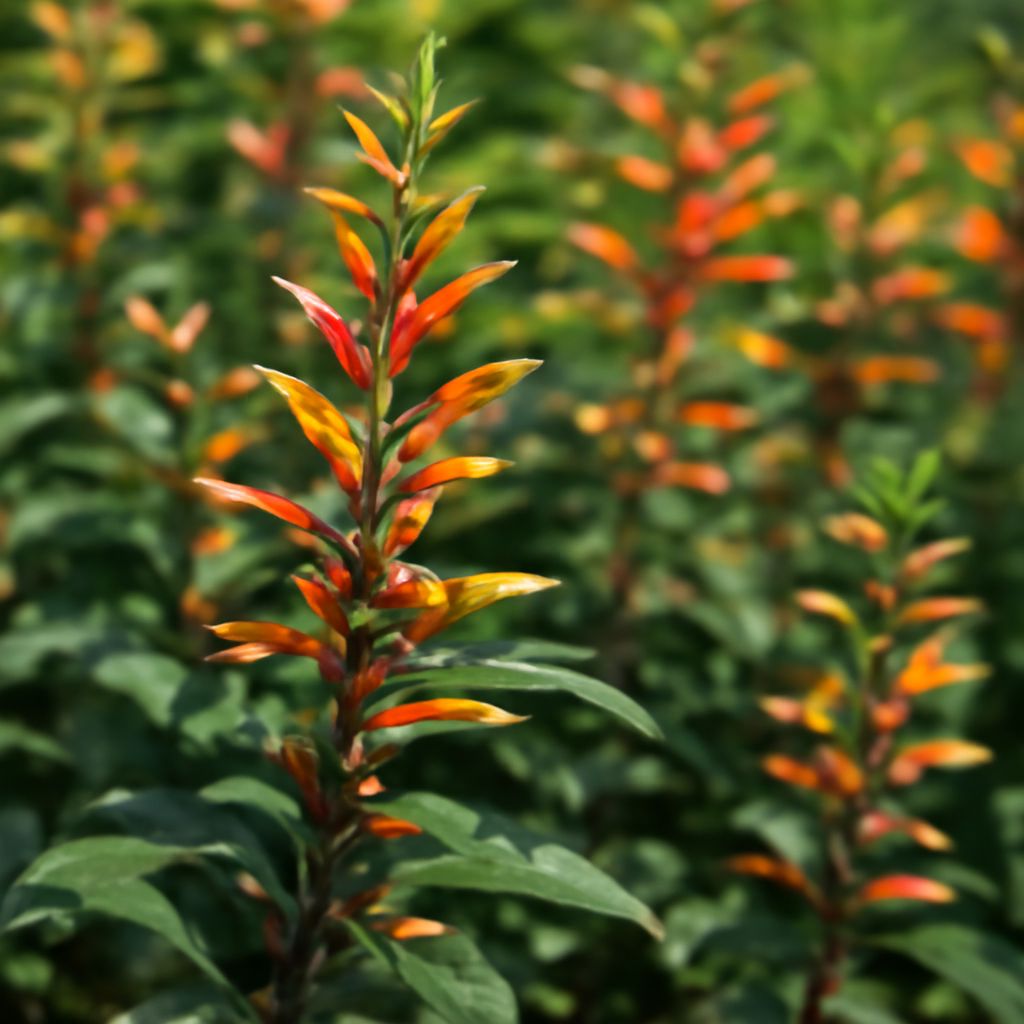
Cuphea micropetala is a bushy perennial with upright stems and narrow leaves. Its candy-corn flowers blend warm orange and yellow tones and are especially welcome when many summer flowers are fading. Clemson Extension lists it as perennial in USDA zones 8 through 11. Give it a sunny bed and space to form a clump rather than a trellis to climb.
Manettia luteorubra, also written M. luteo-rubra, is a twining vine often sold under the shared name. Its small red tubular flowers have yellow tips, and its slender stems wind around a support. Chicago Botanic Garden notes that it can reach 12 feet with support. It can also hang from a basket, so allow for either vertical or trailing growth.
The label candy corn plant alone does not tell you which habit to expect. Other plants may be sold under similar names, too. Ask for the full botanical name if it is missing; then check the mature size and hardiness on the tag. Matching those details to the site will save moving a crowded plant or looking for a trellis after its stems have tangled.
Place the upright Cuphea
A candy corn plant of the Cuphea type belongs in an open bed where its stems can rise and its roots have space. Clemson recommends at least six hours of direct sun for best flowering. Give the clump room away from the front of a narrow path and from smaller neighbors it could shade. Mature size varies with conditions, so use the nursery’s measurements when laying out the bed.
Plant in well-drained soil after severe cold has passed. Dig a hole as deep as the root ball and wider, set the crown level with the surrounding ground, and water thoroughly. During establishment, check the soil regularly and water when the upper layer begins to dry. Once settled, C. micropetala tolerates dry periods better, but a long drought may still call for a deep watering.
Avoid a low spot that stays waterlogged, especially in winter. A light mulch around the clump helps conserve moisture; leave a little clear space around the stems. In a warm garden the candy-corn flowering plant can return from its roots. In colder regions, plan to grow it as a seasonal plant or in a movable container rather than counting on it to survive outdoors.
Give the climber a place to twine
A candy corn vine can dress a small trellis or spill over a hanging basket. Choose a support with slender rails or wires that its stems can wrap around, and secure it before planting. Guide young shoots toward the framework and fasten them loosely with soft ties if needed. Check ties as growth thickens, and redirect wandering stems before they wind into neighboring plants.
Give the flowering candy-corn climber sun to partial shade and well-drained soil. In a container, use a pot with drainage holes and a loose potting mix. Water thoroughly when the surface begins to dry, then allow excess water to escape; a hanging basket may dry quickly in heat and wind. Empty the saucer rather than leaving the pot standing in water.
The climbing candy-corn plant is tender. Chicago Botanic Garden lists Manettia for zones 9 through 12; gardeners in colder places can use it as a seasonal container plant or move it indoors before frost. Choose a bright indoor position, reduce watering as growth slows, and keep checking the soil instead of watering on a fixed calendar.
Use the flowers as clues, then check the name
A candy corn flower is a useful clue: the vivid tubular shape draws the eye and can attract visiting hummingbirds and butterflies. It is not a reliable identification by itself. Look at how the stems grow, the leaf shape, and the botanical name together. If the label says only “candy corn,” the seller may be able to check the supplier’s plant list.
Flowers on the candy-corn vine appear along twining growth, while the Cuphea’s blooms rise from upright branches. Even so, young nursery plants can be trimmed or trained into unusual shapes. The tag remains the best starting point, followed by a look at the mature plant’s needs rather than the small pot in front of you.
For a sunny border with room for a clump, choose C. micropetala and give its roots well-drained soil. For a basket or a structure you want covered with slender shoots, choose the Manettia climber and provide support or trailing space. Either choice begins with a name on the label and a place that fits the plant when it has grown.