A pot of trailing purple stems sits near a window, but its nursery label gives only a familiar common name. If you are caring for a purple wandering-Jew plant, start with the leaves, the light, and the soil rather than assuming the label identifies one particular species.
Several Tradescantia plants share old names and can have purple coloring. Their trailing growth makes them attractive in a hanging basket or on a shelf, where the stems can spill over the edge. Bright light, careful watering, and occasional trimming will help keep the foliage colorful and the crown full.
Wandering Jew, Purple Leaves, and Plant Identity
The name purple wandering jew appears on plants with quite different leaves. It is an older common name whose wording draws on an antisemitic myth; many gardeners now prefer names such as inch plant, spiderwort, or purple heart. Common names are not reliable species labels, so look for a botanical name on the pot and compare the plant itself with a trusted identification source.
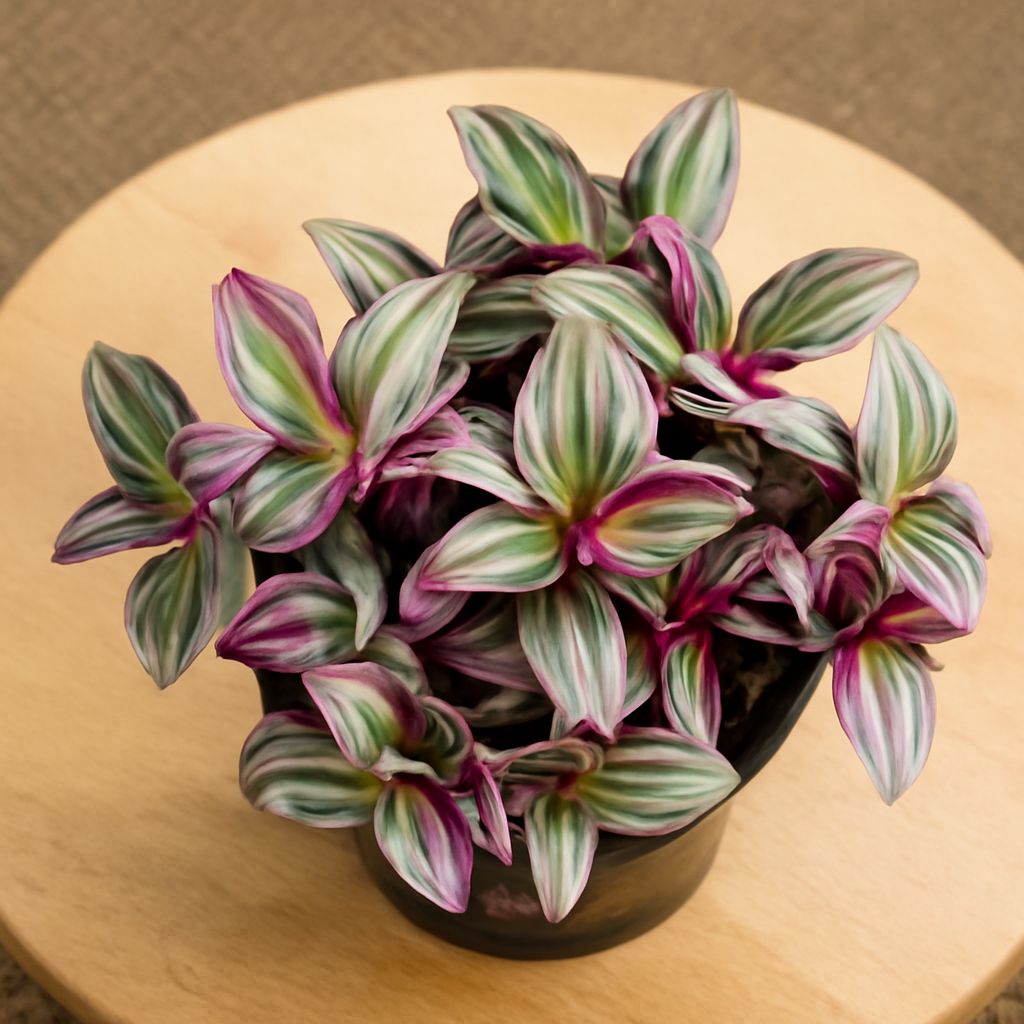
Tradescantia pallida, often called purple heart, commonly has long, narrow purple leaves and fleshy purple stems. Tradescantia zebrina, often called inch plant, typically has broader pointed leaves with silvery stripes above and purple underneath. Cultivars and growing conditions affect color and pattern, so a purple leaf alone cannot settle the identification.
For a wandering jew, purple leaves may be a prominent feature, but inspect both sides of several leaves and look for stripes, leaf shape, and stem habit. The label purple jew plant can refer to more than one Tradescantia. If the botanical name is missing, use those details to narrow the possibilities before buying another plant or looking up species-specific advice.
Give the foliage enough light
Place your plant near a bright window where it receives plenty of indirect light. Some gentle morning sun can help maintain color. Introduce stronger direct sun gradually, especially after a plant has spent time in a dim store or room; hot light through glass can scorch leaves. A sheer curtain or a position a little farther from the window gives you an easy way to soften it.
A purple-leaved wandering plant may become greener, stretch toward the window, or produce longer gaps between leaves when light is too weak. Move it closer to the light gradually and watch the new growth. Pale, bleached, or crisp patches after a move into strong sun suggest that the exposure is too abrupt or intense. Turn the pot occasionally so growth does not lean in only one direction.
Different species and varieties respond differently. Purple heart can take considerable light, while a striped inch plant may do better protected from harsh midday rays indoors. Watch the leaves through the season: a winter window is often dimmer than the same spot in summer.
Water the soil, then let the surface dry
Use a pot with drainage holes and a loose houseplant mix that lets excess water escape. Set the pot in a saucer or decorative outer container, but empty collected water after watering. Roots left sitting in water can deteriorate, even if the leaves look thirsty.
Push a finger about an inch into the mix. When that upper layer feels dry, water slowly until water comes through the drainage holes. Let it drain before returning the pot to its place. Check more often during warm, bright weather and less often when growth slows in winter. Pot size, room temperature, and light all affect how quickly the soil dries, so a fixed weekly schedule can miss what the plant needs.
If a purple inch plant droops, feel the soil before reaching for the watering can. Dry mix and a light pot point toward a drink. Wet mix, soft stems, and yellowing leaves call for less water and a closer look at the roots. Remove badly rotted roots and repot into fresh, well-draining mix if necessary.
Keep the plant full
Tradescantia naturally trails, but long bare stems can leave the center of the pot thin. Pinch or snip a stem just above a leaf node, the point where a leaf joins the stem. Shorten several stems at different lengths rather than cutting everything at once; new side growth can fill the spaces while the remaining trails keep their shape.
You can use healthy cuttings to replenish a sparse basket. Cut below a node, remove the lower leaves, and place the bare node in water or moist potting mix. Keep the cutting in bright, indirect light. Once it has developed roots, plant it in the pot with the parent, leaving enough room for air and watering. Handle broken stems carefully: sap can irritate sensitive skin.
Feed lightly during active spring and summer growth with a balanced houseplant fertilizer diluted according to its label. Pause or reduce feeding in winter when growth slows. If roots crowd the pot and it dries unusually quickly, move the plant to a container only one size larger, with drainage holes and fresh mix.
When the purple trailing plant starts producing long, widely spaced stems and greener new leaves, it is asking for a closer look at the light. Move it gradually to a brighter spot and pinch back the bare growth; the color and spacing of new leaves will show how well the change is working.