A sunny spot near a path may call for a shrub with fragrant spring flowers; a moist bed farther out may be better suited to fruit and fall color. The Burkwood hybrid, Viburnum × burkwoodii, serves the first purpose well, while smooth witherod offers another combination of flowers and berries. Measure the space and check the soil before choosing either one.
Burkwood: fragrance near a place you use
Burkwood viburnum is a rounded, branching shrub with pink buds that open to fragrant white spring flowers. University of Illinois Extension lists the hybrid at about 8 to 10 feet high and 6 to 8 feet wide. Give it a place near a path or seating area where its scent can be appreciated, with enough room for the branches to grow.
The V. × burkwoodii hybrid does best in sun to partial shade and moist, well-drained soil. It may retain leaves through winter in milder areas but can be more deciduous in colder ones. Cultivars differ: ‘Conoy’, for example, is lower and wider than the general hybrid, so read the full name and dimensions on the tag.
Viburnum nudum for a moist bed and fall fruit
Viburnum nudum, also called possumhaw or smooth witherod, is a deciduous shrub native to eastern North America. It has glossy leaves, flat clusters of small creamy flowers, and fruit that changes color as it ripens. NC State Extension notes that the species can reach 12 feet tall and wide, though named selections may be smaller.
Give smooth witherod sun to part shade and moist, acidic soil; it can also tolerate wetter conditions than many shrubs. The possumhaw shrub suits a rain-garden margin where moisture is available, provided you allow for its spread. The flowers are smaller and flatter than a snowball’s, but the foliage and fruit carry interest into fall.
For a good berry display on V. nudum, ask the nursery for a genetically distinct compatible pollination partner that blooms at the same time. Two plants of the same cloned cultivar are not necessarily a suitable pair. Leave enough space for both rather than squeezing them into a bed intended for one shrub.
‘Mariesii’: room for horizontal branches
The plant sold as viburnum Mariesii is Viburnum plicatum var. tomentosum ‘Mariesii’, a doublefile selection. Its branches spread in tiers, with white flower clusters held above them in spring. Illinois Extension describes it as 6 to 10 feet tall; allow generous width as well, because its horizontal form is part of its appeal.
Set the ‘Mariesii’ doublefile viburnum where you can see it from the side and where branches will not crowd a walkway. It prefers sun to partial shade and moist, well-drained soil. Unlike the Burkwood shrub, it is chosen chiefly for its layered outline and flowers rather than fragrance. Leave the spreading doublefile cultivar enough space to keep its natural form without constant shearing.
Allegheny: a broad screen
Allegheny viburnum is commonly sold as Viburnum × rhytidophylloides ‘Alleghany’; check the cultivar name even when a seller spells the common name with an “e.” It makes an upright, spreading shrub with substantial, textured leaves and flat clusters of creamy flowers in spring. A USDA National Arboretum profile records a mature specimen around 10½ feet high and 11 feet wide.
The ‘Alleghany’ viburnum works as an informal screen where there is room for its bulk. Its foliage can persist in milder winters, while cold and wind can cause damage or leaf loss. Give this hybrid leatherleaf shrub sun to part shade, moisture, and shelter from exposed winter winds. Fruit production benefits from a compatible pollination partner.
Which Chinese plant is on the label?
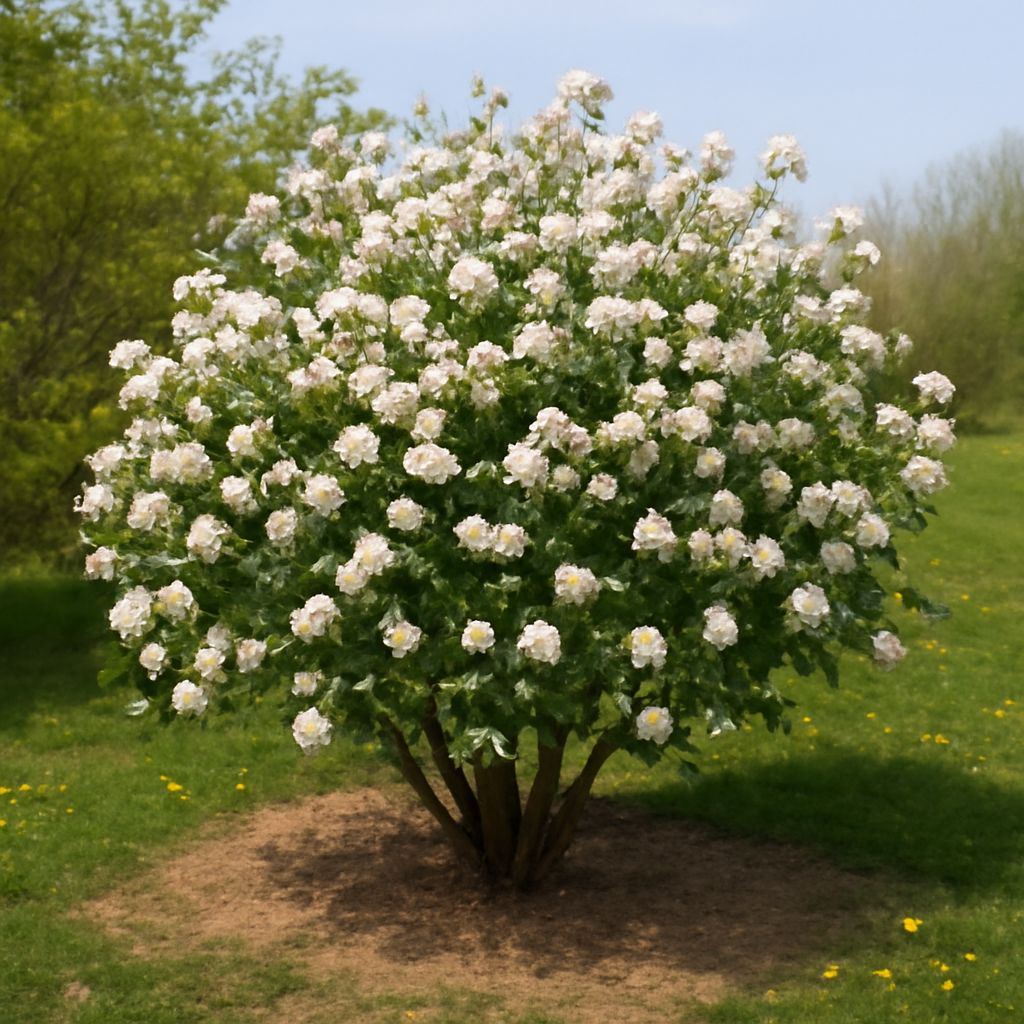
A label saying chinese viburnum does not identify one shrub. Chinese snowball, Viburnum macrocephalum, is a large, rounded shrub or small tree with spring flower clusters that turn from greenish to white. NC State Extension says it can reach 25 feet tall and 20 feet wide. Many cultivated forms have sterile flowers and do not produce fruit.
Chinese evergreen viburnum, Viburnum propinquum, is a different species: an evergreen to semi-evergreen rounded shrub, about 4 to 8 feet tall and wide, with smaller greenish-white flower clusters. Check its hardiness for your location. Ask for the botanical name before buying either Chinese species, especially if you have only enough space for the smaller plant.
Make the choice fit the ground
Check the soil after rain and note the hours of direct sun. For a damp, acidic bed with room for a compatible pair, the moisture-loving species is a strong candidate. For scent near a path, choose the Burkwood hybrid; for a wide display, give ‘Mariesii’ space. For screening, allow a broad, sheltered position. Check the size and hardiness of either Chinese species against the available site.
Water a newly planted shrub regularly through establishment, and mulch the root area without piling material against the stems. If pruning is needed, check the plant’s flowering habit and prune after bloom so next spring’s buds are not removed unnecessarily. Buy the shrub whose mature width fits the space you measured.