Start with a sunny, well-drained site and a cultivar suited to your winters. A peach grown for its flowers can bring a brief, vivid display to a garden, but its mature shape and the timing of its blossoms matter just as much as their color. Check the label before you choose a place for it.
Peach tree blossom color and timing
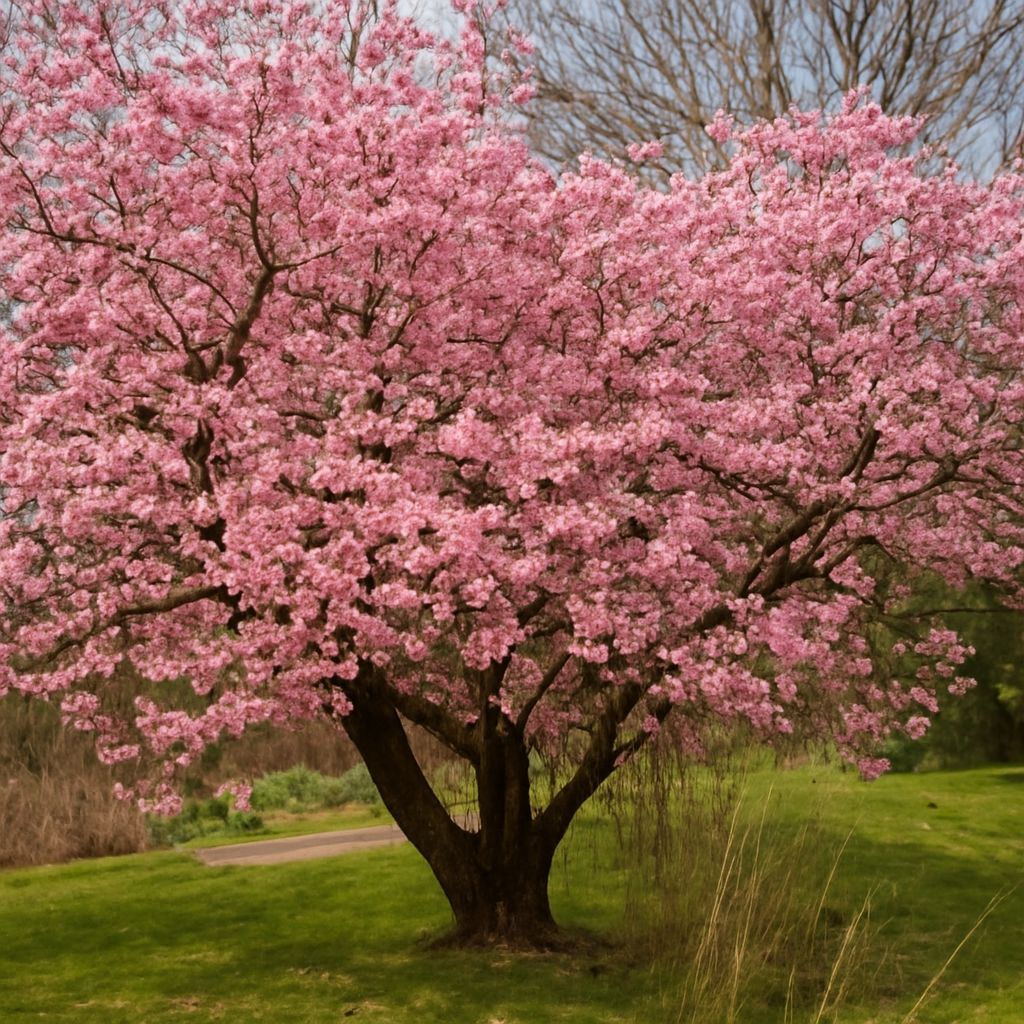
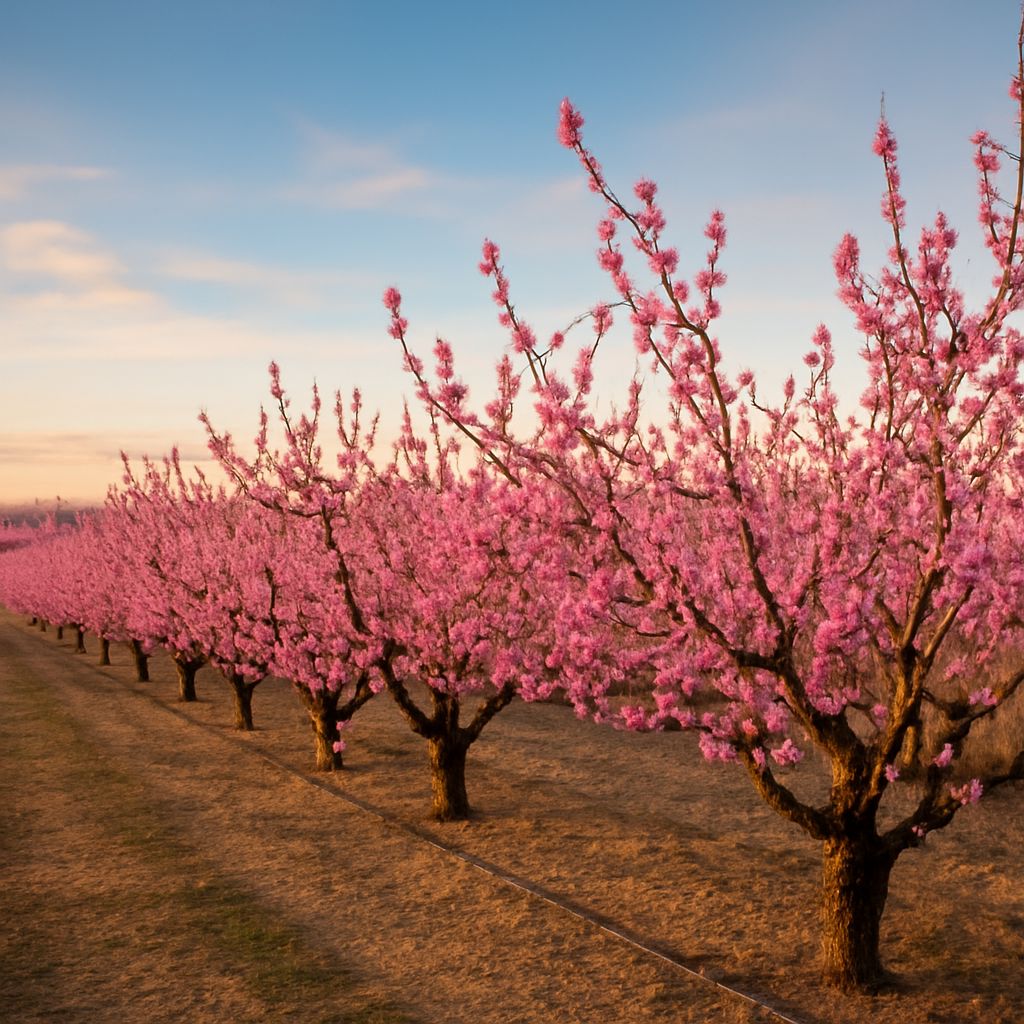
Peaches grown for display are selected chiefly for their flowers rather than a useful crop. Depending on the cultivar, the blossoms may be pink, white, red, or a combination of colors. Some have single flowers with an open center; others have many petals and a fuller appearance. Look at the named cultivar rather than assuming every flowering peach will look alike.
A peach tree blossom may open before the leaves have fully emerged, making the flowers conspicuous against bare branches. The show is seasonal, not a summer-long display. Bloom dates vary with the cultivar and the weather, and an early warm spell followed by frost can damage open flowers or buds. Ask a local nursery when the variety usually blooms in your area.
Peach blossoms on a tree can be beautiful up close, but the view from your house or path matters too. A pale-flowered selection may stand out against dark evergreens, while a stronger color may suit a more open backdrop. Check the plant in flower if possible; photographs and nursery descriptions can make subtle shades look different.
Match the tree to the space
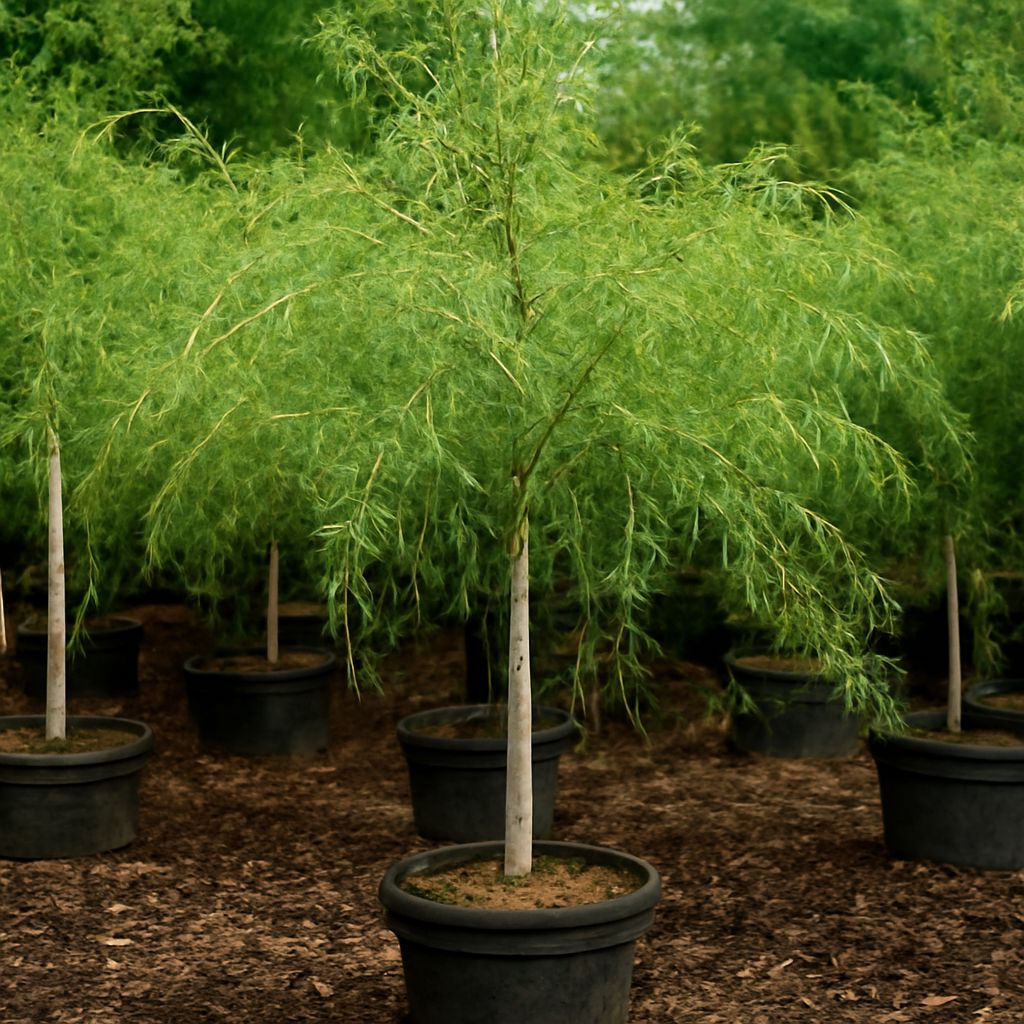
A flowering peach tree needs enough room for its mature height and spread, not just the space occupied by a young nursery pot. Cultivars differ in size and habit: some make upright small trees, while others have spreading or weeping branches. A weeping form needs clear space around its outer branches to show its shape and allow access beneath or beside it.
An ornamental peach tree can serve as a spring focal point near a seating area or along a garden path. Set it far enough back that branches at their mature width will not obstruct the path or press against a building. Check overhead wires and leave room to walk around the tree for watering and inspection.
Consider the months after the peach flowers fade, too. The leaves and branching outline will be visible much longer than the blooms. Choose a position where the tree fits the rest of the garden through summer and winter, instead of judging the spot only by its spring display.
Check sun, soil, and climate
Give a flowering peach tree a position in full sun, ideally at least six hours of direct sunlight a day. Sun supports growth and flowering, while an open position allows air to move around the leaves. Avoid a hollow where cold air settles, especially if late frosts are common when the tree is in bloom.
Good drainage is important. If rainwater stands for a long time after a storm, the roots may suffer in that spot. Choose a better-drained location or consult a local nursery about whether a raised planting area is practical. Do not assume that putting gravel in the bottom of a planting hole will solve a poorly drained site.
Before selecting a flowering ornamental peach, check the cultivar’s stated USDA hardiness range against your location. Winter cold is only part of the question: some peaches need enough winter chill, and spring frost can still harm the flowers. A local extension office or nursery can help identify cultivars that perform well under your area’s winter and spring conditions.
Understand fruit and upkeep
A peach selected for ornamental bloom can produce fruit, although the amount and quality depend on the cultivar and growing conditions. Some fruit may be small or unappealing for eating. Ask about the particular tree if fallen fruit on a walk or patio would be a concern. Do not assume that a flowering selection is fruitless.
Peaches grown for their blossoms still need ordinary care. Water a newly planted tree deeply during establishment, checking the soil rather than relying on a rigid schedule. A layer of organic mulch helps conserve moisture; keep it several inches away from the trunk. Once established, the tree will still need attention during extended dry weather.
Like other peaches, decorative peach trees grown for bloom can face insect and disease problems. Peach leaf curl and borers are examples, though local pressure varies. Ask your extension office what to watch for in your area and inspect leaves, shoots, and the trunk regularly. A stressed tree in wet soil or deep shade is a poor choice for a site that cannot be improved.
Make the final check
Compare the bloom color and form with the space you can give the tree. Check that the site has sun, drainage, and enough clearance for the mature canopy, and think about where any fruit will fall. Before buying, read the label for the cultivar’s mature size, hardiness, and expected peach blossom color; ask locally about chill and spring frost if either is uncertain.