A bare foundation bed needs winter greenery, but the shrub you choose must fit the light, soil, and space beside the house. An azalea that stays evergreen can provide leaves beyond spring bloom, provided its variety is suited to your winters and its roots are not left in wet ground.
Before buying, measure the bed and notice when the sun reaches it. A compact plant in a nursery pot may eventually reach a window or block a path. The right choice starts with the mature size on the label and the conditions the site can offer year-round.
Evergreen azalea foliage through the seasons
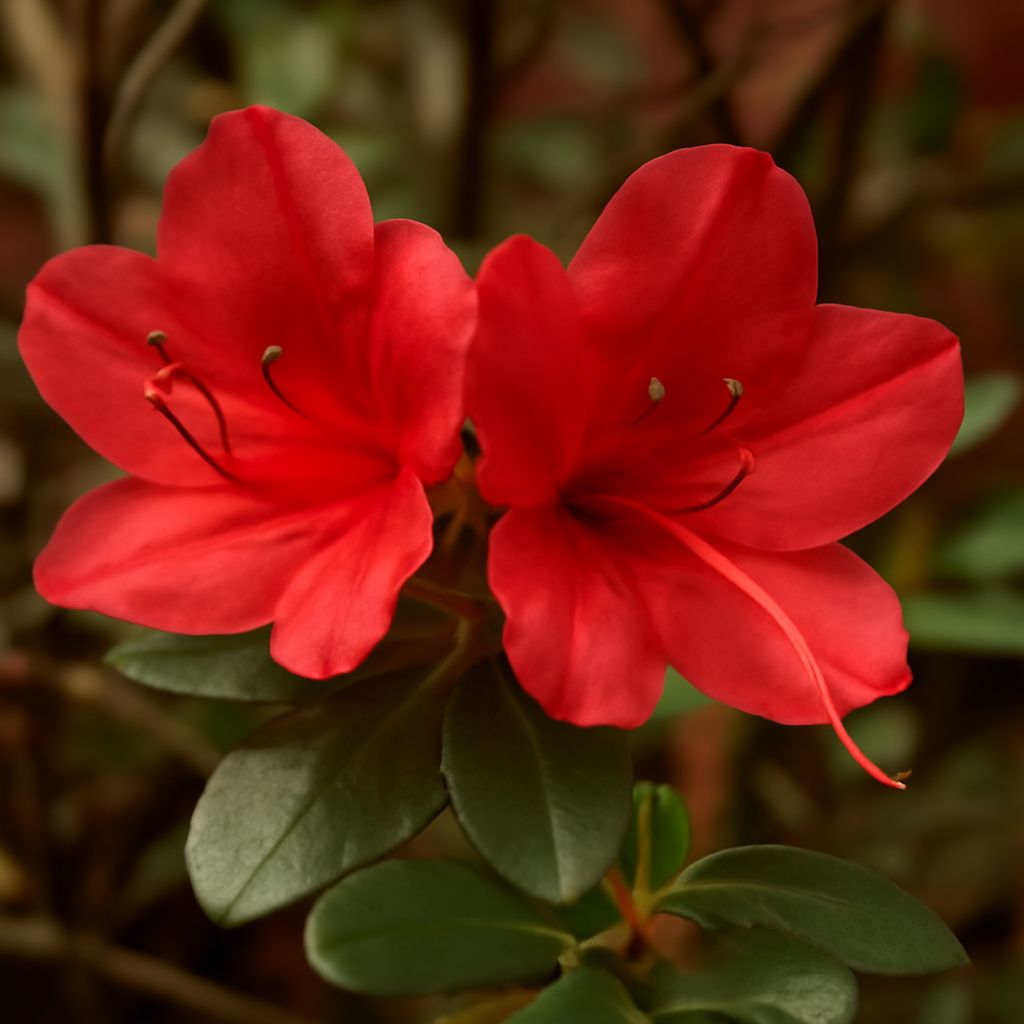
Evergreen azaleas keep foliage through winter, though individual leaves age and fall. Some azalea varieties with evergreen leaves shed more foliage in cold weather, and remaining foliage may change color or look sparse after a severe winter. For an azalea, evergreen foliage means the shrub normally retains leaves across the seasons; it does not mean that every leaf stays on the plant indefinitely.
Flowers are usually the main spring display. Some selections also bloom later: University of Georgia Extension describes Encore hybrids as flowering in spring and again in fall. The size and timing of a later flush depend on the variety and growing conditions. If repeat bloom matters to you, choose a named evergreen reblooming azalea rather than assuming every shrub will do it.
Azaleas belong to the genus Rhododendron. Nursery names often emphasize the cultivar or series, so retain the tag after planting. It will help you check the plant’s expected size and pruning schedule later.
Match the variety to the site
Start with winter hardiness. Check the USDA zone range for the named cultivar, then consider exposure: cold wind and bright winter sun can dry evergreen leaves, particularly in an exposed location. A sheltered site can reduce stress, but choose a plant rated for your local climate rather than relying on shelter alone. Flower buds can be damaged even when the shrub itself survives.
For a smaller bed in a cooler region, evergreen Girard azaleas are one group to investigate. University of Missouri Extension describes these as compact evergreen shrubs suitable for colder climates. ‘Girard’s Crimson’ has red flowers; North Carolina Extension recommends part shade and protection from afternoon sun for this selection. Check the specific plant’s hardiness and mature dimensions before buying.
For a larger border in a mild area, evergreen Southern Indica azaleas can provide more substantial screening. Alabama Extension lists ‘Formosa’ with rose-purple blooms and ‘George Lindley Taber’ with light pink flowers. Give either ample room and verify its suitability for your winter zone: the plants in this group can grow much larger than a compact selection.
If flowers beyond spring are a priority, compare named Encore plants such as purple-flowered ‘Autumn Amethyst’. Some members of the series need more sun to rebloom well than traditional shade-grown choices. Check the individual tag for size and cold tolerance; series names describe a group, not one uniform shrub.
Check light, soil, and drainage
Most evergreen azaleas appreciate filtered light or morning sun with shelter from the strongest afternoon rays. Deep shade can reduce flowering, while hot exposure can stress foliage and dry the soil. Observe the intended spot in summer, when a wall may reflect heat onto the plant, as well as in spring when the bed may seem cooler.
These azaleas with evergreen foliage have shallow roots and prefer acidic, well-drained soil that holds some moisture. A soil test tells you the pH and helps determine whether the bed needs adjustment before planting; a target around pH 4.5 to 6 is commonly recommended for azaleas. If the soil is strongly alkaline, consider a suitable alternative or a large container with an appropriate acidic potting mix, rather than repeatedly guessing at amendments.
Check drainage after rain. If water stands in the bed or soil stays saturated, choose a better-drained spot or prepare a broad raised bed. Roots need air as well as moisture. Improve the whole planting area as needed rather than making a small pocket of amended soil in heavy clay.
Plant for the size you expect
Set the root ball of an azalea that keeps its leaves slightly above the surrounding grade in a broad hole, then fill around it without burying the crown. Water thoroughly after planting. Keep the root area evenly moist during establishment, checking beneath the surface and watering deeply when it begins to dry. Avoid frequent sprinkling that wets only the surface, and do not leave the roots waterlogged.
Apply 2 to 3 inches of organic mulch over the root area to moderate moisture and suppress weeds. Keep it away from the trunk. Because roots lie near the surface, pull weeds carefully and avoid deep cultivation around them. Once established, water during extended dry periods, especially before the ground freezes in a dry fall.
An evergreen azalea can serve as a low border, a foundation planting, or part of a larger screen when its mature dimensions fit. Place a compact Girard selection where a path needs to stay open; consider a larger Indica for a mild, spacious bed; choose a reblooming cultivar where its light needs can be met. In each case, let winter hardiness, drainage, and available width decide the final choice.